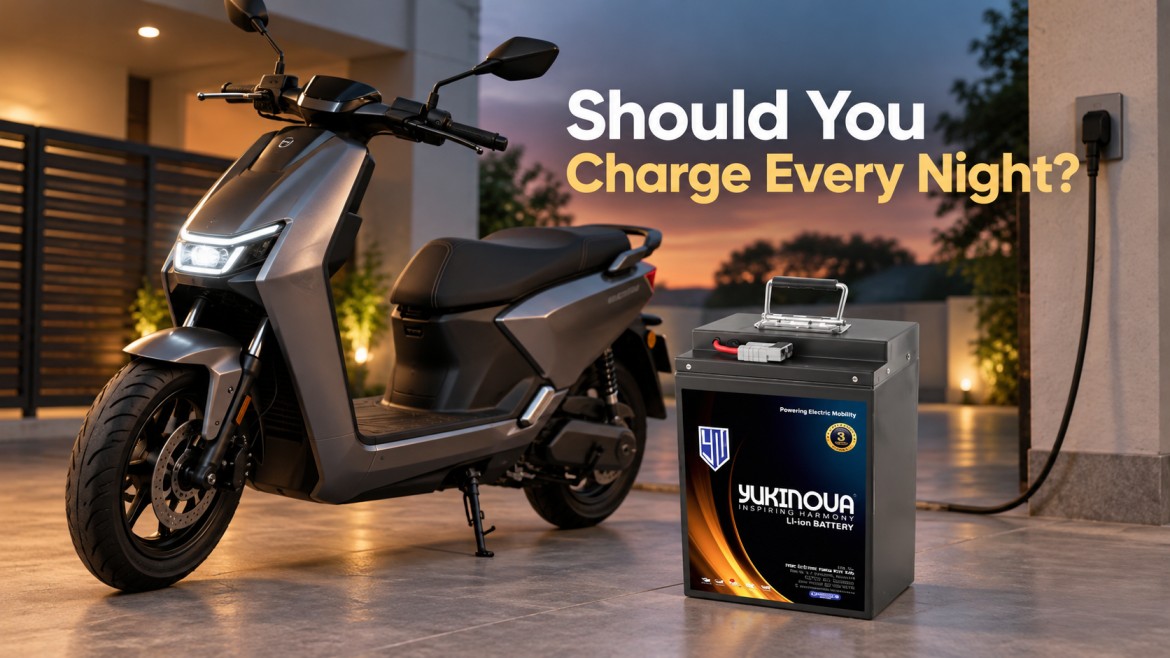
A Lithium Ion Battery for Electric Scooter doesn’t require the same procedure for charging for all users. There are significant differences between people who cover 12 km daily and those who travel 60 km in order to complete their job. Therefore, the procedure of charging each night cannot be viewed as good or bad. It depends on individual battery consumption and requirements for the next day.
The better question is simple: How much charge do you usually have left at the end of the day?
Short Daily Rides Do Not Always Need A Full Recharge
Let us say you use your scooter for a short office commute. You travel 15 km, return home, and still have a healthy amount of charge left.
In that case, plugging in every night may not be necessary.
You can charge when the remaining battery is no longer enough for the next planned trip. This keeps the routine simple and avoids charging only because it has become a habit.
On the other hand, a rider covering 50–70 km daily will naturally charge more often. Delivery riders and people with long commutes may need to recharge almost every evening.
A Lithium Ion Battery for Electric Scooter should be charged around real use, not a fixed rule copied from someone else.
Do Not Wait For The Battery To Reach Zero
Some riders still believe the battery should be used completely before charging again.
That is not needed with lithium batteries.
If you wait until the scooter is almost empty every day, you also leave yourself with no spare range. A traffic diversion, longer route, or extra stop can suddenly become a problem.
It is more practical to charge before the battery gets too low for your next journey.
This does not mean you must top it up after every short ride. It simply means there is no benefit in deliberately running it to zero.
Do You Need 100% Every Night?
Not always.
If tomorrow’s journey is short, you may not need a full charge. However, if you are planning a longer ride, starting with more available charge makes sense.
For example, a rider doing 18 km tomorrow has a different need from someone travelling across the city for work.
That is why a Lithium Ion Battery for Electric Scooter should be treated as part of your travel plan.
Also, do not follow random charging percentages from the internet without checking your scooter manual. Battery systems differ. Some vehicles manage charging through their own BMS and software.
What About Charging After A Long Ride?
After a long ride, the battery may feel warmer than usual.
If that happens, park the scooter in a safe and ventilated place. Follow the charging advice given by the scooter or battery maker.
Also, use the approved charger.
A wrong charger can create problems with voltage, current, connector fit, or battery communication. The charger and battery should be designed to work together.
For a Lithium Ion Battery for Electric Scooter, the battery cells are only one part of the system. The BMS, charger, wiring, and vehicle electronics also affect charging.
Daily Range Can Change Even When The Battery Is Fine
Sometimes riders start charging more often because the scooter suddenly feels like it has less range.
The battery may not always be the reason.
Range can change because of:
- Low tyre pressure
- Higher riding speed
- Extra passenger or luggage
- Heavy traffic
- Hills
- Weather
- Frequent hard acceleration
So, if the range drops, check the whole riding pattern before deciding that the battery has become weak.
This is especially important for people who use the scooter every day for work.
How Yukinova Looks At Charging
At Yukinova, we look at how the scooter is actually used.
A short-distance rider does not need the same routine as someone riding throughout the day. Daily distance, charging time, available range, and the next day’s travel all matter.
The aim is not to charge the battery as often as possible.
The aim is to have enough charge when you need it.
A Lithium Ion Battery for Electric Scooter works best when the charging routine fits the rider’s real daily use.
Final Thoughts
So, should you charge your electric scooter every night?
If you use most of the battery every day, probably yes. If your daily ride is short and plenty of charge remains, you may not need to.
Avoid making “every night” or “only when empty” a strict rule.
Instead, look at your daily distance, remaining charge, next trip, and the guidance given for your scooter.
That is a far more practical way to charge.
Frequently Asked Questions
1. Is It Okay To Charge An Electric Scooter Every Night?
Yes, if your daily travel uses a large part of the available charge and the scooter manufacturer allows regular overnight charging.
2. Should I Let The Battery Reach Zero Before Charging?
No. A lithium battery does not need to reach zero before you recharge it.
3. Do I Need To Charge My Scooter To 100% Every Time?
Not always. It depends on how far you plan to ride next and the charging guidance for your scooter.
4. Why Is My Electric Scooter Range Lower Than Before?
Range can change because of tyre pressure, speed, traffic, load, hills, weather, or battery condition.
5. Can I Use Any Charger With My Electric Scooter?
No. Use the charger approved for the scooter and battery. The voltage, current, connector, and charging system must match.
6. How Often Should A Lithium Ion Battery For Electric Scooter Be Charged?
There is no fixed schedule for every rider. Charge based on daily distance, remaining battery, and the next planned trip.