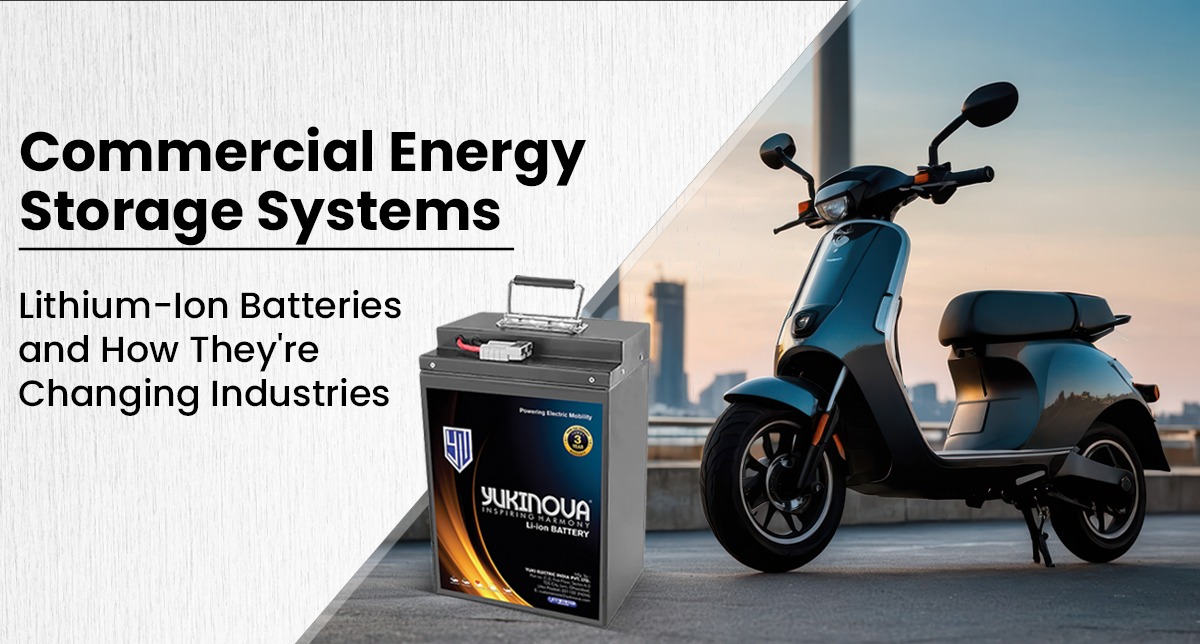
As the energy sector evolves at light speed in modern times, energy storage systems (ESS) is one of the most sensational technologies that is promoting efficiency, sustainability, and reliability for business. With companies requiring round-the-clock power supply and governments providing incentives for renewables, ESS has become the pillar of contemporary energy infrastructure. Of all the solutions, lithium-ion battery storage is the most sought after and efficient solution, creating a wave of transformation in commercial battery storage applications across the globe.
Why Energy Storage Systems (ESS) are Important to Business
Degraded grids, increasing energy expenses, and carbon emissions reduction needs are a significant challenge for commercial properties. Data centers, manufacturing plants, retail stores, and medical centers can never experience downtime. This is where energy storage systems (ESS) come in.
By holding back electricity during low-demand periods and supplying it during peak demand, ESS provides stable, cost-effective, and secure energy. Moreover, when combined with solar and wind power, ESS does not require fossil fuels, enabling companies to meet sustainability goals.
Lithium-Ion Battery Storage: The Video Celebrity
Out of a number of choices available, lithium-ion battery storage was the initial preference for commercial developments. The reasons are simple:
- High Energy Density: Lithium-ion batteries can store energy in less space, hence it is more appropriate for urban commercial settings where space is limited.
- Longer Life Cycle: Compared to the traditional lead-acid battery, lithium-ion batteries provide thousands of charge-discharge cycles, which lowers replacement costs.
- Efficiency: With a round-trip efficiency of 90% and higher, they provide maximum use of energy.
- Low Maintenance: Lithium-ion demands minimal or zero maintenance, so it’s cost-efficient for companies.
This efficiency is the reason why industries are switching to commercial battery storage using lithium-ion technology, over traditional lead-acid arrangements.
Uses of Commercial Energy Storage Systems
The ability of energy storage systems (ESS) to be versatile has made them a necessity across various industries:
- Production Units – To supply power even in case of a power cut.
- Retail & Shopping Complexes – For illuminating lights, driving escalators, and air conditioning units economically.
- Healthcare Facilities – Hospitals depend on ESS to ensure that life-saving devices operate without failure.
- Data Centers & IT Parks – Such companies do not have any room for downtime; ESS ensures backup power that is reliable.
- Renewable Integration – Solar and wind farms use ESS to store surplus power and supply stable power to the grid.
The Future of Commercial Battery Storage
Commercial battery storage demand is increasing at an unprecedented rate across the world. In the quest for net-zero goals, industries are moving away from diesel gensets to ESS based on lithium-ion batteries. Governments, too, are providing incentives and policies to switch towards cleaner storage technologies.
Firms investing in lithium-ion battery storage both become energy independent and save costs of operation while enhancing the company’s image as an environmentally friendly business.
Conclusion
The transition towards cleaner, smarter, and more resilient energy solutions is irreversible. For companies, adopting state-of-the-art energy storage systems (ESS) is not a choice anymore—it’s a necessity. With the power of lithium-ion battery storage, businesses are experiencing uninterrupted processes, cost efficiencies, and reduced footprints.
As commercial battery storage continues to pick up momentum, lithium-ion technology will lead the charge with this revolution, allowing businesses all over the world to embrace a future of innovation, sustainability and efficiency.