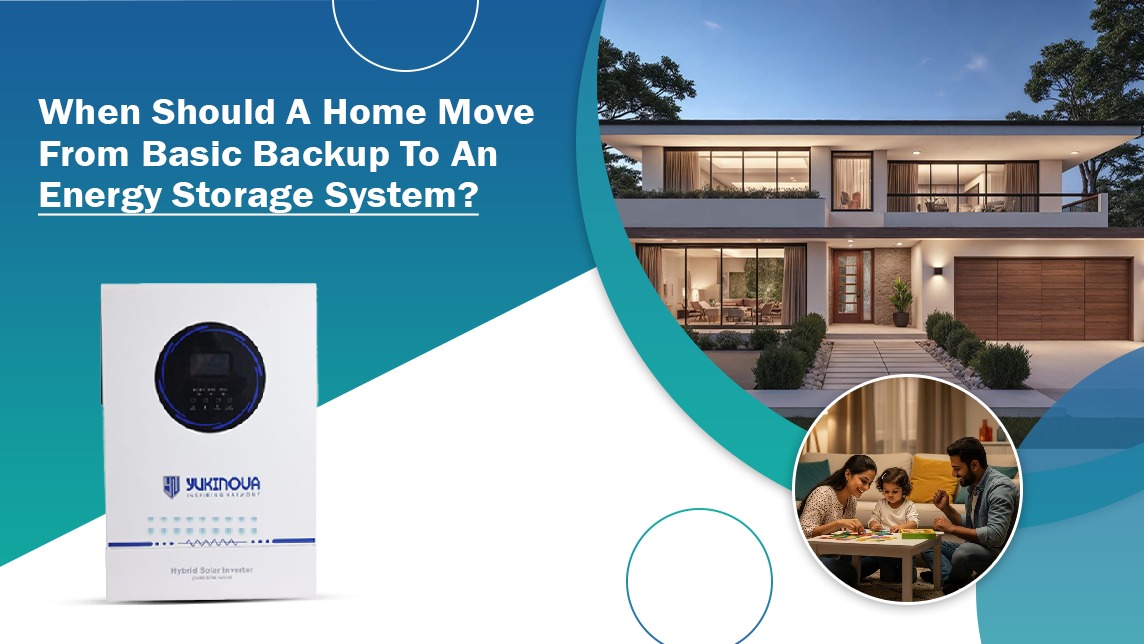
When Should A Home Move From Basic Backup To An Energy Storage System?

Most homes start with a simple inverter setup.

One inverter. One battery. Enough backup for lights, fans, Wi-Fi, and maybe a few small appliances. For many homes, that works fine.

But after some time, the need changes.

Power cuts become longer. Work-from-home starts. Children need online classes. CCTV, routers, laptops, TV, and kitchen appliances get added. Some homes also install solar panels. Slowly, the old backup system starts feeling small.

That is when a home should start thinking beyond basic backup and look at an energy storage system battery or hybrid solar inverter.

When Basic Backup Is Enough

A normal inverter setup is fine when the power need is small.

If you only want lights, fans, and basic charging during short power cuts, you may not need a bigger system. A good lithium battery for inverter can handle this kind of home backup well when it matches the load properly.

Yukinova offers lithium batteries for inverter use for homes and small offices, with focus on faster charging, lower maintenance, stable backup, and longer service life compared to regular battery options.

So, for simple backup, do not overcomplicate things. First check your actual load. If the battery handles it comfortably, basic backup is enough.

When You Need More Than An Inverter

The problem starts when your backup need becomes bigger than the system.

For example, if your inverter struggles during every power cut, backup drops too fast, or the battery does not charge properly before the next outage, the system may be undersized.

This happens often when homes add more devices but never upgrade the backup setup.

A laptop here. A router there. CCTV later. Then maybe a bigger fan load or small appliance. The inverter battery keeps taking more pressure.

At this stage, an energy storage system battery makes more sense. It gives better planning for bigger loads, longer backup, and smoother power use.

When Hybrid Solar Inverter Comes Into The Picture

Solar changes the whole backup discussion.

Panels produce power during the day. But without proper storage, that power may not help much at night or during outages. This is where a hybrid solar inverter becomes useful.

A hybrid solar inverter manages solar power, battery storage, and grid supply together. Yukinova lists hybrid solar inverter models such as 4KVA, 6.2KVA, and 11KVA options.

So, if a home already has solar or plans to install solar, it should not think only about panels. It should think about storage too.

Solar without storage can reduce bills.

Solar with storage can improve backup.

When Shops And Home Offices Need Stability

This is not only for big houses.

Small shops and home offices also need stable power. A shop may need lights, billing machines, CCTV, and phone charging. A home office may need Wi-Fi, laptop charging, lighting, and backup during meetings.

If power failure stops work, then backup is not just comfort. It becomes part of daily productivity.

In such cases, Yukinova’s inverter battery and hybrid inverter options can help users build a better power setup based on actual load and future needs. Yukinova’s product range includes hybrid inverters, inverter batteries, portable power, and other lithium battery solutions.

Final Thoughts

A basic inverter is enough for small backup needs.

But if your home has higher load, frequent power cuts, solar panels, or work-from-home pressure, it may be time to move toward an energy storage system.

Do not upgrade by guesswork.

Check your load. Check backup time. Check charging source. Check whether solar is part of the plan.

The right system should do one simple thing well: keep power available when your home actually needs it.
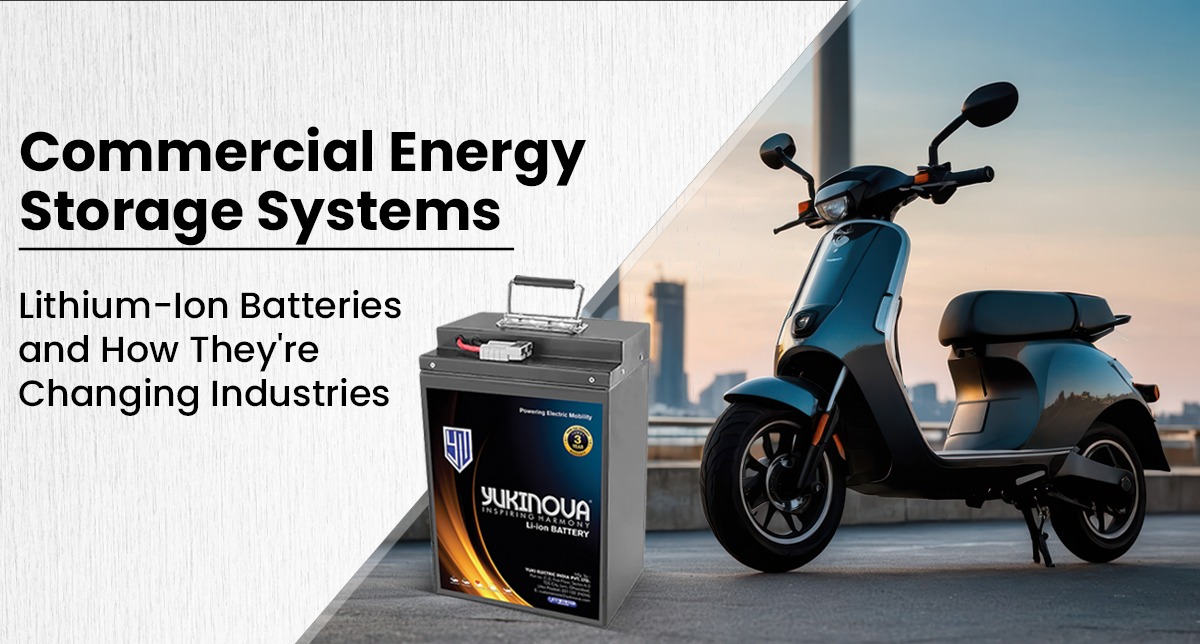
Commercial Energy Storage Systems: Lithium-Ion Batteries and How They’re Changing Industries

As the energy sector evolves at light speed in modern times, energy storage systems (ESS) is one of the most sensational technologies that is promoting efficiency, sustainability, and reliability for business. With companies requiring round-the-clock power supply and governments providing incentives for renewables, ESS has become the pillar of contemporary energy infrastructure. Of all the solutions, lithium-ion battery storage is the most sought after and efficient solution, creating a wave of transformation in commercial battery storage applications across the globe.

Why Energy Storage Systems (ESS) are Important to Business

Degraded grids, increasing energy expenses, and carbon emissions reduction needs are a significant challenge for commercial properties. Data centers, manufacturing plants, retail stores, and medical centers can never experience downtime. This is where energy storage systems (ESS) come in.

By holding back electricity during low-demand periods and supplying it during peak demand, ESS provides stable, cost-effective, and secure energy. Moreover, when combined with solar and wind power, ESS does not require fossil fuels, enabling companies to meet sustainability goals.

Lithium-Ion Battery Storage: The Video Celebrity

Out of a number of choices available, lithium-ion battery storage was the initial preference for commercial developments. The reasons are simple:

  • High Energy Density: Lithium-ion batteries can store energy in less space, hence it is more appropriate for urban commercial settings where space is limited.
  • Longer Life Cycle: Compared to the traditional lead-acid battery, lithium-ion batteries provide thousands of charge-discharge cycles, which lowers replacement costs.
  • Efficiency: With a round-trip efficiency of 90% and higher, they provide maximum use of energy.
  • Low Maintenance: Lithium-ion demands minimal or zero maintenance, so it’s cost-efficient for companies.

This efficiency is the reason why industries are switching to commercial battery storage using lithium-ion technology, over traditional lead-acid arrangements.

Uses of Commercial Energy Storage Systems

The ability of energy storage systems (ESS) to be versatile has made them a necessity across various industries:

  • Production Units – To supply power even in case of a power cut.
  • Retail & Shopping Complexes – For illuminating lights, driving escalators, and air conditioning units economically.
  • Healthcare Facilities – Hospitals depend on ESS to ensure that life-saving devices operate without failure.
  • Data Centers & IT Parks – Such companies do not have any room for downtime; ESS ensures backup power that is reliable.
  • Renewable Integration – Solar and wind farms use ESS to store surplus power and supply stable power to the grid.

The Future of Commercial Battery Storage

Commercial battery storage demand is increasing at an unprecedented rate across the world. In the quest for net-zero goals, industries are moving away from diesel gensets to ESS based on lithium-ion batteries. Governments, too, are providing incentives and policies to switch towards cleaner storage technologies.

Firms investing in lithium-ion battery storage both become energy independent and save costs of operation while enhancing the company’s image as an environmentally friendly business.

Conclusion

The transition towards cleaner, smarter, and more resilient energy solutions is irreversible. For companies, adopting state-of-the-art energy storage systems (ESS) is not a choice anymore—it’s a necessity. With the power of lithium-ion battery storage, businesses are experiencing uninterrupted processes, cost efficiencies, and reduced footprints.

As commercial battery storage continues to pick up momentum, lithium-ion technology will lead the charge with this revolution, allowing businesses all over the world to embrace a future of innovation, sustainability and efficiency.