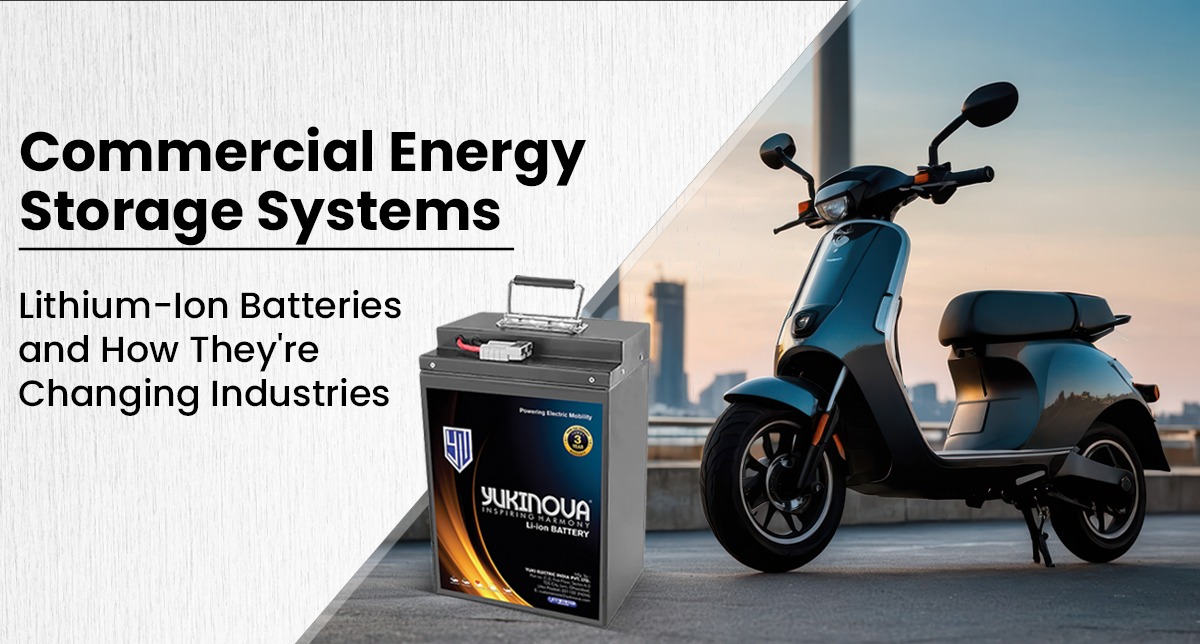
Commercial Energy Storage Systems: Lithium-Ion Batteries and How They’re Changing Industries

As the energy sector evolves at light speed in modern times, energy storage systems (ESS) is one of the most sensational technologies that is promoting efficiency, sustainability, and reliability for business. With companies requiring round-the-clock power supply and governments providing incentives for renewables, ESS has become the pillar of contemporary energy infrastructure. Of all the solutions, lithium-ion battery storage is the most sought after and efficient solution, creating a wave of transformation in commercial battery storage applications across the globe.

Why Energy Storage Systems (ESS) are Important to Business

Degraded grids, increasing energy expenses, and carbon emissions reduction needs are a significant challenge for commercial properties. Data centers, manufacturing plants, retail stores, and medical centers can never experience downtime. This is where energy storage systems (ESS) come in.

By holding back electricity during low-demand periods and supplying it during peak demand, ESS provides stable, cost-effective, and secure energy. Moreover, when combined with solar and wind power, ESS does not require fossil fuels, enabling companies to meet sustainability goals.

Lithium-Ion Battery Storage: The Video Celebrity

Out of a number of choices available, lithium-ion battery storage was the initial preference for commercial developments. The reasons are simple:

  • High Energy Density: Lithium-ion batteries can store energy in less space, hence it is more appropriate for urban commercial settings where space is limited.
  • Longer Life Cycle: Compared to the traditional lead-acid battery, lithium-ion batteries provide thousands of charge-discharge cycles, which lowers replacement costs.
  • Efficiency: With a round-trip efficiency of 90% and higher, they provide maximum use of energy.
  • Low Maintenance: Lithium-ion demands minimal or zero maintenance, so it’s cost-efficient for companies.

This efficiency is the reason why industries are switching to commercial battery storage using lithium-ion technology, over traditional lead-acid arrangements.

Uses of Commercial Energy Storage Systems

The ability of energy storage systems (ESS) to be versatile has made them a necessity across various industries:

  • Production Units – To supply power even in case of a power cut.
  • Retail & Shopping Complexes – For illuminating lights, driving escalators, and air conditioning units economically.
  • Healthcare Facilities – Hospitals depend on ESS to ensure that life-saving devices operate without failure.
  • Data Centers & IT Parks – Such companies do not have any room for downtime; ESS ensures backup power that is reliable.
  • Renewable Integration – Solar and wind farms use ESS to store surplus power and supply stable power to the grid.

The Future of Commercial Battery Storage

Commercial battery storage demand is increasing at an unprecedented rate across the world. In the quest for net-zero goals, industries are moving away from diesel gensets to ESS based on lithium-ion batteries. Governments, too, are providing incentives and policies to switch towards cleaner storage technologies.

Firms investing in lithium-ion battery storage both become energy independent and save costs of operation while enhancing the company’s image as an environmentally friendly business.

Conclusion

The transition towards cleaner, smarter, and more resilient energy solutions is irreversible. For companies, adopting state-of-the-art energy storage systems (ESS) is not a choice anymore—it’s a necessity. With the power of lithium-ion battery storage, businesses are experiencing uninterrupted processes, cost efficiencies, and reduced footprints.

As commercial battery storage continues to pick up momentum, lithium-ion technology will lead the charge with this revolution, allowing businesses all over the world to embrace a future of innovation, sustainability and efficiency.

How Is Your ESS Battery Getting Drained So Easily? Here’s a Shocking Truth

Have you ever wondered why your Energy Storage System (ESS) battery gives up so quickly — just when you need it the most? You’re not alone. Thousands of homes and businesses face the same frustrating issue: power cuts arrive, but the backup doesn’t last. The real problem? It might not be your power load. It could be your battery.

At the center of this story is a game-changing solution: Yukinova, a trusted lithium-ion battery manufacturer in UP, offering smarter, longer-lasting ESS power. Let’s break down why your current battery might be draining fast — and what you can do about it.

The Real Reason Your ESS Battery Dies Too Soon

Many traditional ESS setups aren’t optimized for modern energy needs.
Here’s what typically causes quick drainage:

  • Overloading the system (trying to power more than your battery can handle)
  • Low battery capacity that doesn’t match your actual energy demands
  • Aging batteries with reduced storage performance
  • Inefficient charging and discharging cycles due to outdated technology

Sound familiar? If your system isn’t built for today’s usage patterns, your backup is already behind the times.

The Shift to Smarter Power: Lithium-Ion Technology

This is where lithium-ion steps in — and where Yukinova leads the charge.

Unlike traditional systems, lithium-ion ESS batteries are:

  • Lightweight but powerful
  • Fast charging and slow draining
  • Maintenance-free
  • Longer-lasting — up to 3x the lifespan

Yukinova’s smart ESS battery solutions are designed to tackle everything that drains performance — and deliver exactly what homes and businesses need: reliable, energy-efficient power that lasts.

The Benefits You Actually Feel

Choosing the best ESS battery isn’t about buying the most expensive option — it’s about choosing the right technology.
Here’s how a Yukinova lithium-ion ESS battery makes a difference:

  • Consistent backup during frequent power cuts
  • Zero maintenance hassles
  • Smaller footprint – perfect for compact spaces
  • Eco-friendly and safe
  • Years of dependable use – it’s a true long-lasting ESS battery

ESS Battery Buying Guide: What to Look For

Not all batteries are created equal. Here’s a quick checklist before you invest: ✅ Know your energy needs: Total up what you’ll run — fans, lights, Wi-Fi, appliances.
Choose high-efficiency tech: If you want serious backup power, go lithium.
Stick to trusted names: Go with top ESS battery brands like Yukinova.
Balance cost with value: Look for affordable ESS batteries that also deliver long-term performance, not just a low sticker price.

Why Yukinova Is Worth It

There are many options in the market — but Yukinova stands apart. As a leading lithium-ion battery manufacturer in UP, it offers:

  • Custom battery solutions for homes, shops, offices, and industries
  • Premium-grade lithium-ion cells for longer battery life
  • Smart power management systems
  • Competitive pricing for every need

Whether you’re tired of short backups or building your first ESS setup, Yukinova offers the best ESS battery for home use — and beyond.

Final Shocker? You Might Be Paying More For Less

Here’s the truth: sticking with outdated ESS batteries may actually cost more in the long run. Shorter lifespan, poor efficiency, and constant system issues add up. Yukinova’s lithium-ion batteries save you all that trouble — and more.So the next time your ESS gives up too soon, ask yourself: is it the power cut… or your battery?
The smarter answer is already here. It’s time to power up with Yukinova.

How ESS Can Support Renewable Energy Integration in Commercial and Industrial Applications

As the world continues its shift towards sustainability, businesses are increasingly turning to renewable energy sources like solar and wind power. However, these renewable energy sources come with their own set of challenges, particularly in terms of consistency and storage. This is where ESS for Commercial & Industrial Applications come into play. These systems offer a reliable solution for integrating renewable energy sources into commercial and industrial operations, enabling companies to maximize the benefits of clean energy while ensuring uninterrupted power supply.

 The Challenge of Renewable Energy Integration

Renewable energy sources, especially solar and wind, are intermittent by nature. They generate power when environmental conditions are favorable but may fall short during periods of low sunlight or calm winds. This variability can pose significant challenges for businesses that rely on a constant and stable power supply to maintain operations.

For commercial and industrial sectors, which often have high and variable energy demands, relying solely on renewable energy without a backup solution can lead to inefficiencies, operational disruptions, and higher costs. This is where ESS for Commercial & Industrial Applications step in to bridge the gap.

 How ESS Supports Renewable Energy Integration

1. Energy Storage for Consistent Power Supply

 ESS for Commercial & Industrial Applications, such as batteries and other storage technologies, can store excess energy generated by renewable sources during periods of high generation (e.g., sunny or windy days). This stored energy can then be used when renewable generation is low, ensuring a continuous power supply. For commercial and industrial applications, this means they can rely on renewable energy for much of their operational needs without worrying about disruptions caused by fluctuations in power generation.

2. Load Shifting and Peak Demand Reduction

Energy Storage Systems (ESS) allow businesses to store energy during off-peak hours, when electricity rates are lower, and use it during peak hours when energy costs are higher. By using stored renewable energy during these peak times, companies can significantly reduce their energy bills. For industrial operations that require significant power, this can result in substantial cost savings and improved bottom lines.

3. Improved Grid Stability

ESS for Commercial & Industrial Applications help stabilize the grid by balancing supply and demand. In commercial and industrial applications, ESS can provide grid services such as frequency regulation, voltage support, and load balancing. This not only enhances the reliability of the power supply but also facilitates the integration of higher levels of renewable energy into the grid. By reducing the pressure on the grid, ESS helps prevent power outages and ensure businesses can operate without disruptions.

4. Enhanced Sustainability and Reduced Carbon Footprint

One of the most significant advantages of ESS for Commercial & Industrial Applications is that they enable businesses to rely more heavily on renewable energy sources. By storing excess renewable energy for later use, companies can reduce their dependence on fossil fuels, which helps lower their carbon emissions and contribute to global sustainability goals. This aligns with growing corporate social responsibility (CSR) initiatives and regulatory requirements for carbon reduction.

5. Scalability and Flexibility

Energy Storage Systems (ESS) are highly scalable, meaning they can be tailored to meet the specific energy needs of a commercial or industrial operation. Whether a small business or a large-scale industrial facility, ESS can be designed to support the required energy storage capacity. This scalability ensures that businesses can expand their renewable energy usage as their energy needs grow over time.

 The Future of Renewable Energy Integration

As renewable energy technology continues to evolve, ESS for Commercial & Industrial Applications will play an even greater role in supporting the transition to a sustainable energy future. For commercial and industrial applications, ESS offers a way to overcome the limitations of renewable energy sources while maximizing their potential. With the added benefits of cost savings, operational efficiency, and sustainability, integrating ESS for Commercial & Industrial Applications is becoming increasingly vital for businesses that want to stay competitive in a rapidly changing energy landscape.

 Conclusion

The integration of renewable energy into commercial and industrial applications presents both opportunities and challenges. However, with the implementation of Energy Storage Systems (ESS), businesses can unlock the full potential of renewable energy, ensuring a reliable, cost-effective, and sustainable power supply. By supporting renewable energy integration, ESS not only helps businesses reduce their energy costs but also contribute to global efforts towards a cleaner, greener future.

Ready to harness the power of renewable energy for your business? Explore how Yukinova ESS for Commercial & Industrial Applications can optimize your energy usage and sustainability goals. Contact Yukinova today to learn more about our tailored energy storage solutions!