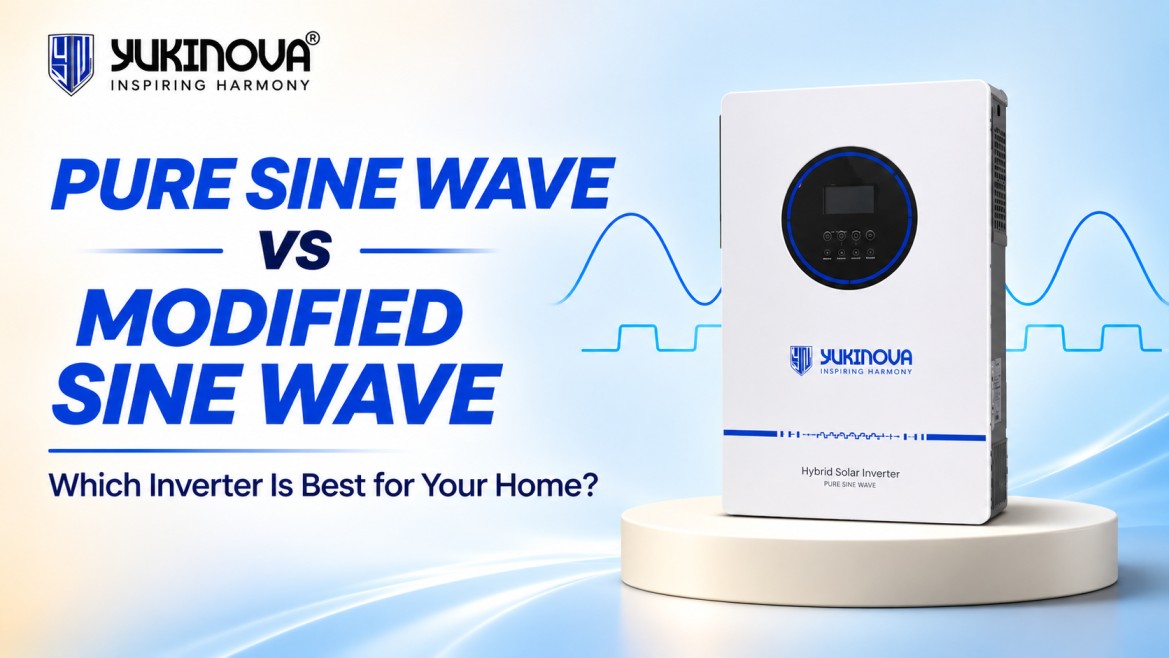
Nothing is more frustrating than a power cut, and choosing the Best Inverter for Home can be tricky to get right. A pure sine wave inverter will provide clean power that is similar to the supply you would receive from the grid. A modified sine wave inverter will create a stepped waveform. Generally speaking most modern homes will prefer a pure sine wave inverter.
What Is a Pure Sine Wave Inverter?
A pure sine wave inverter takes the stored energy from batteries and produces smooth alternating current.
This will be very similar to the electricity supplied from your mains socket.
Why Is Pure Sine Wave Technology Preferred?
Many modern devices will have sensitive electronics or electric motors that will work better on a clean power source.
A pure sine wave inverter will usually be suitable for powering most of your household devices such as TVs, computers, fridges, fans etc.
This can also help eliminate the annoying hum and electrical interference that some devices can suffer from when using a modified sine wave.
The inverter needs to be large enough to supply your equipment.
What Is a Modified Sine Wave Inverter?
Provides approximately a sine wave. It does this by creating steps in the voltage. The sine wave is not perfectly shaped.
The simpler design will usually make it cheaper than the pure sine wave.
Basic appliances can work well with a modified sine wave.
Devices with motors, electronics or certain power supplies may not be as efficient, have more noise or compatibility issues.
Pure Sine Wave vs Modified Sine Wave: Key Differences
This is mainly down to the quality of the power produced.
In general pure sine wave inverters will give you smooth power and will work with most appliances. Modified sine wave inverters can offer a cheaper option however they may not be compatible with all the gadgets within your home.
Some basic heating appliances with just resistors will work with both styles as long as the manufacture says so.
However some appliances like refrigerators, computers and motorised gadgets may need pure sine wave for reliable performance.
Picking an inverter purely due to price could cause problems later on.
Which Inverter Is Better for Home Appliances?
The Best Inverter for Home depends on what appliances you want to use when there’s an outage.
If you have a television, computer, ceiling fan and fridge you’ll find that pure sine wave tends to be more practical.
Why Do Motors Perform Differently?
Motors are generally designed to work with sinusoidal AC.
A modified sine wave has more harmonic content which can cause increases in heating, vibration or noise depending on the design of the motor.
A pure sine wave generally removes this concern.
However, appliances like fridges will also need sufficient startup power and the inverter may still fail to start a compressor if it does not have enough surge capability.
Does a Pure Sine Wave Inverter Consume Less Electricity?
It depends.
Efficiency will depend upon many factors such as inverter design, load being powered and individual product specs.
A pure sine wave can help motorised devices work better but it doesn’t necessarily mean that they will be more energy efficient.
Check the efficiency ratings from the manufacturers.
How to Choose the Best Inverter for Home
Work out the wattage required from your appliances.
For example, if you run 250W of fans, 100W of lights and 150W of TV in your home, you will have a running load of around 500W.
Make sure your inverter can handle this amount and is large enough to allow for extra requirements and surge requirements.
Also ensure that your batteries are compatible with your inverter (voltage and charging), changeover time, warranty and technical support.
Some sensitive equipment will require specific power requirements from the manufacturer.
Explore Home Power Solutions From Yukinova
Yukinova provide hybrid solar Inverters and battery systems
Inverters are available with pure sine wave technology to ensure suitable devices can run off your system.
Homeowners can browse our range of inverters and ask about our specifications. Our inverters come with varying output capacities, battery compatibilities and solar charging needs.
Selecting the right inverter and battery combination is key to having a reliable back up system at home.
Frequently Asked Questions
1. Which Is the Best Inverter for Home: Pure or Modified Sine Wave?
Pure sine wave is generally preferable for modern homes because it provides wider compatibility with electronic and motor-driven appliances.
2. Can a Modified Sine Wave Inverter Run a Refrigerator?
Some refrigerators may operate, but modified waveforms can cause overheating, noise or starting problems. Check the appliance manufacturer’s requirements.
3. Is a Pure Sine Wave Inverter Suitable for Computers?
Yes, provided the inverter has adequate capacity and suitable changeover characteristics. Sensitive computers may also require UPS-grade backup.
4. Why Are Pure Sine Wave Inverters More Expensive?
They generally require more sophisticated electronic circuitry to produce a smoother output waveform with lower harmonic distortion.
5. Does Pure Sine Wave Technology Increase Battery Backup Time?
Not automatically. Backup time mainly depends on usable battery capacity, connected load and overall system efficiency.
6. Can I Replace a Modified Sine Wave Inverter With Pure Sine Wave?
Yes, provided the replacement supports the required battery voltage, appliance load, charging requirements and installation configuration.
Conclusion
A good quality inverter will be able to give you some high quality electrical outputs. For more basic requirements, a modified sine wave may be ok. However, most of the time you will get better compatibility with pure sine wave inverters.
To ensure you have a reliable back-up power source, compare the technical specifications.
Take a look at our range of inverters and batteries from Yukinova to find the right power back-up for your home.