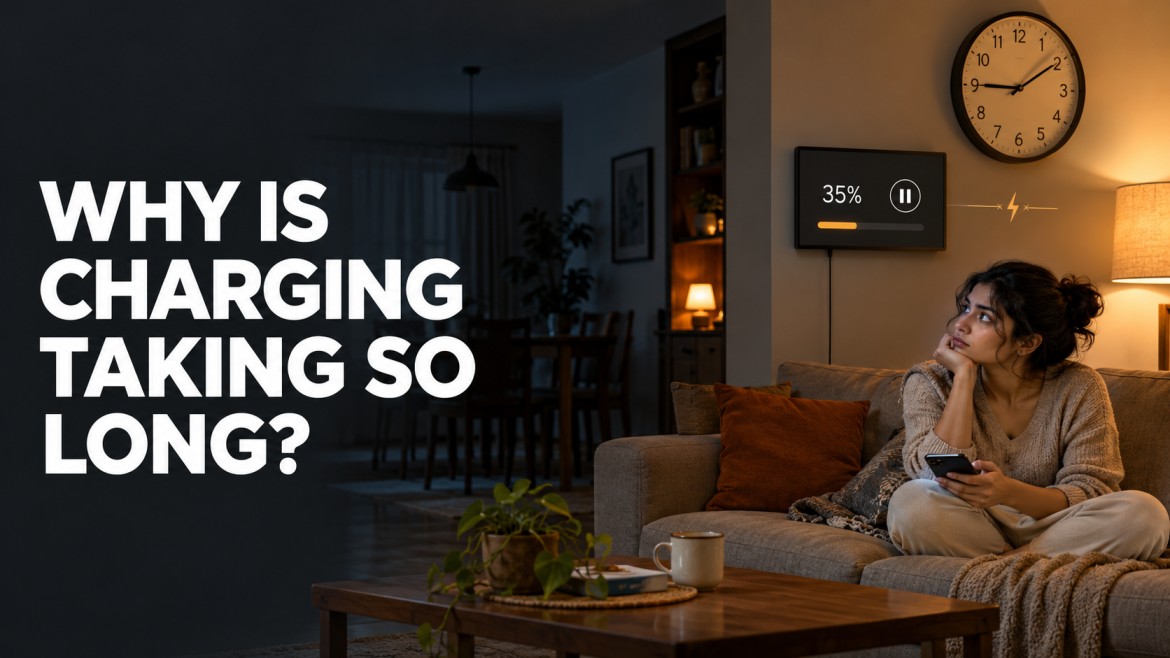
Why Does an Inverter Battery Take Longer to Recharge After Repeated Power Cuts?

Blackouts are annoying, but have you wondered what if your inverter battery is taking extra long to charge? You must have observed that sometimes your battery charges normally, but at other times it continues to be charged for hours together. This usually occurs in places where electricity is cut off repeatedly during the day.

Most people think that it is a matter of your battery becoming weaker. But this is not always true. The Inverter Battery manufacturer in India knows that the time taken to charge varies due to many factors like battery discharge level, current, temperature, and state of the battery.

Let us see how frequent power outages impact the charging process.

Repeated Power Cuts Leave the Battery Partially Charged

Suppose you experience an outage of electricity for two hours early in the morning. In this case, the inverter battery will provide electricity to fans, light, and other electrical appliances.

However, once electricity becomes available, the process of charging begins. But before the battery is fully charged, the power outages take place.

Now the battery has to support all those activities once again, although it did not get enough time to recharge itself.

Such situations could keep on coming throughout the day.

In this way, the inverter battery keeps on getting partially charged, which will have to recharge after consuming that energy.

Battery Charging Current Makes a Difference

The charging current will determine how fast energy can be delivered into the battery.

For instance, a 150Ah battery charged at 10 amperes could take a lot more time than the same battery being charged at 15 amperes if the two charging currents are allowed in the battery and inverter.

But charging isn’t all about increasing the current.

The charging circuit within the inverter will regulate the entire charging process depending on battery voltage and charging stage among others.

Reducing the battery charging current will lengthen the time required for charging, especially in cases where the battery has been discharged deeply.

Deep Discharge Can Extend Charging Time

Use of a battery for half an hour and running of appliances for several hours is not the same thing.

Longer outages tend to utilize more stored power.

In case the battery reaches a lower state of charge, more time will be needed to revive it. The lead acid batteries charge slower towards the end due to the reduced charging current.

Deep discharging of a battery can cause its accelerated deterioration.

The reputed Inverter Battery Manufacturer in India usually advises going for a battery based on one’s power needs and not solely on the price of the battery.

Battery Age and Maintenance Affect Charging

A used battery does not necessarily perform like a fresh battery.

There are chances of plate deterioration, sulfation, and decreased charge absorption in a lead-acid battery. This may affect the charging process and decrease the battery’s capacity.

In case of a flooded tubular battery, there are chances of having low electrolyte levels.

The following are some symptoms that can indicate battery problems:

  • Taking too much time to charge
  • Less backup time
  • Battery overheating
  • Frequent low-battery alerts
  • Charger indicator malfunctions

These symptoms require further investigation by an expert.

Your Connected Load Also Matters

For instance, in a situation where there is an outage, and you have a house powered by three fans, LED bulbs, and a TV,

your battery is going to drain faster compared to a situation where you only have one fan and two lights plugged in.

Increased consumption of electricity translates to increased need for replenishment of energy when the power resumes.

This will have a direct impact on power backup efficiency.

How to Improve Inverter Battery Charging Performance

Replacing the battery each time charging becomes slow is not necessary.

Some initial checks should be done.

Check that the charging settings of the inverter are compatible with your battery. Always make sure that the terminals of the battery are free from dirt. For batteries that require maintenance, always follow the guidelines provided by the manufacturer for checking electrolytes.

Always avoid connecting any appliances when there are long power outages.

Finally, the most important thing is to choose a battery that is capable of catering to your requirements.

Choose the Right Battery for Reliable Backup

Power outage is another factor that makes inverter batteries work harder. The use of the proper battery and inverter combination can ensure effective operation and charging.

Yukinova concentrates on providing power backups according to various needs. You need to keep in mind several aspects when you choose an Inverter Battery manufacturer in India.

The proper choice of battery and its correct usage will help you deal with daily power outages much better.

Frequently Asked Questions (FAQs)

1. Why does my inverter battery charge slowly after frequent power cuts?

Repeated outages interrupt charging cycles. The battery may discharge again before reaching full charge, increasing the time needed to restore its stored energy.

2. What is the normal inverter battery charging time?

Charging time depends on battery capacity, discharge level, charging current, and battery chemistry. Many lead-acid inverter battery systems require several hours to recharge fully.

3. Does battery charging current affect charging speed?

Yes. Higher supported charging current can reduce charging time, but the current must remain within the battery and inverter manufacturer’s recommended limits.

4. Can frequent power cuts damage an inverter battery?

Frequent power cuts do not automatically damage a battery. However, repeated deep discharge and prolonged partial charging can accelerate wear, particularly in lead-acid batteries.

5. How can I improve my inverter’s power backup performance?

Reduce unnecessary loads, maintain the battery properly, use compatible charging settings, and ensure the battery capacity matches your electricity requirements.

6. When should I replace an inverter battery that charges slowly?

Consider replacement when testing confirms significant capacity loss or battery deterioration. First, have a technician check the charging system, connections, and battery condition to identify the actual cause.
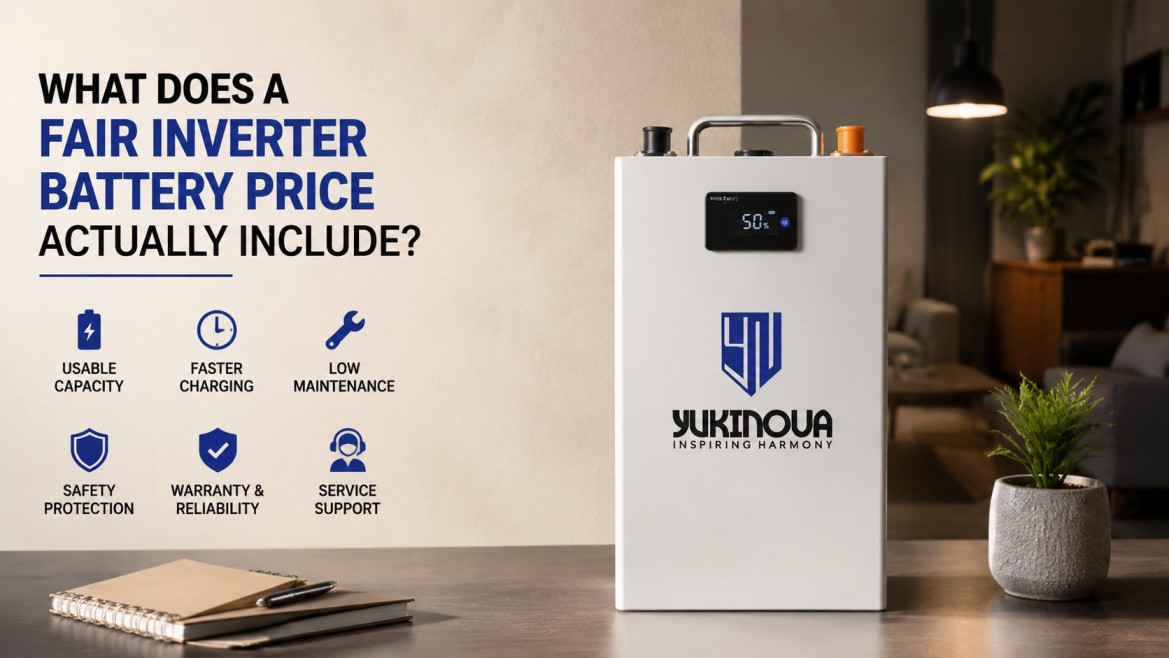
What Does A Fair Inverter Battery Price Actually Include?

All purchasers start with the same question: “What is the Inverter Battery Price?” This is a good question to ask. However, the price quoted on the paper does not say everything.

Even if two batteries are comparable in capacity, size, and warranty period, they are likely to be different when it comes to their true value. One battery will perform better and be cheaper to maintain while the other will be cheaper initially but more expensive down the road.

Therefore, an appropriate Inverter Battery Price should be determined by the services it provides over its entire lifetime rather than just its initial price.

Capacity On The Label Is Only The Starting Point

Capacity of the battery is generally the first factor people compare. But, just Ah does not give an idea about how much backup will be actually available. Factors like the load connected, state of the battery, charging process, inverter efficiency, and energy that the battery can utilize are also important.

For instance, the battery may have high capacity. However, if it is not capable of handling repeated deep discharge cycles, its backup capacity may start to deteriorate faster than anticipated. Therefore, while considering the Inverter Battery Price, performance under normal usage conditions should also be taken into account.

Charging Time Affects Daily Convenience

Charging speed is more important where power interruptions occur often.

If a battery charges slowly, chances are that the battery is yet to charge fully before another power interruption occurs. This implies that users end up with less standby time despite having a high-capacity battery. Lithium battery for inverters can be a good option for users who require batteries that charge quickly.

However, charging capabilities depend on the compatibility of the components involved. It is important that both the inverter and the battery are compatible. Otherwise, a fast charging battery will fail to offer maximum benefits. It is for this reason that a reasonable Inverter Battery Price also considers the advantage of reduced charging time.

Maintenance Has A Cost Too

The price paid for the battery is not the only cost associated with its ownership. There are batteries that require frequent inspection, testing of their liquid contents, cleaning of terminals, and ventilation. These procedures may appear trivial at first sight, yet they do take time and might lead to certain expenses through the years of battery operation.

Inverter battery based on lithium technology requires less maintenance than many other batteries. It can make the process of owning the battery easier for homes, office buildings, stores, and any other commercial establishments. The initial cost may be larger in certain cases. But low maintenance costs may increase its total value.

Battery Life Changes The Real Cost

If a single battery is cheaper but has to be replaced sooner, the other one will cost more but function effectively for a longer time. The lower cost may turn out to be more expensive in the end. 

Several factors determine the battery’s lifespan, among others:

  • Cell or plate quality
  • Charging pattern
  • Depth of discharge
  • Operating temperature
  • Daily load
  • Build quality
  • Usage habits

Reliable lithium battery manufacturers in India focus on these points because long-term performance depends on more than battery capacity.

A fair Inverter Battery Price should reflect how long the battery can support the user under normal operating conditions.

Safety Should Never Be Treated As An Extra

Safety is an inherent aspect of the battery value. A good battery should be able to provide safe charging, cooling, voltages, and discharge. In the case of lithium batteries, an efficient Battery Management System becomes indispensable.

Safety will decrease hazards related to overcharging, deep discharging, short circuits, and temperature variations.

The cheaper option might look appealing, however, the cost savings must not come on the account of safety systems. Make sure you understand which safety measures are used by the battery manufacturer and how the testing of the product is done.

Warranty Terms Matter More Than Warranty Numbers

A warranty that goes on for a long time sounds very good indeed.

But buyers need to know what the warranty entails. They need to find out whether it involves full replacement, pro-rata replacement, services, and any conditions involved in claiming. They must also know the paperwork involved and whether any local help will be provided.

The buyer can get better value from a more expensive battery with a clearer warranty process than an inexpensive one with complicated warranty terms. This is the philosophy at Yukinova.

Service Support Adds Real Value

Even a quality battery might require inspection someday. The consumer may encounter situations such as poor back-up capability, slow charging, loose wiring, wrong charger, and overloading. In such situations, the correct diagnosis becomes necessary.

Without any help, the consumer will either end up changing his good battery or will keep on using his bad charging arrangement. It also saves him time and money.

That is why it becomes important for consumers to check the brand and after-sales services along with the comparison of Inverter Battery Price.

The Cheapest Battery Is Not Always The Best Deal

Price matters, but value matters more.

A fair Inverter Battery Price should include:

  • Suitable usable capacity
  • Stable backup
  • Reasonable charging time
  • Low maintenance needs
  • Strong safety protection
  • Clear warranty terms
  • Reliable service support
  • Practical battery life

At Yukinova, we focus on complete power solutions rather than price alone. The right battery should match the user’s load, backup need, charging time, and daily power-cut pattern.

That is how buyers get real value from their investment.

Final Thoughts

An inverter battery’s cost should not just be determined based on the price. There are other factors that determine the actual cost including the time taken to charge it, the amount of maintenance required, safety, frequency of replacement, warranty and services offered.

Before selecting an inverter battery at the lowest cost, consider what you will gain from it through its lifetime. An inverter battery that costs a little extra may offer many benefits in the long run.

Frequently Asked Questions

1. What Factors Affect Inverter Battery Price?

Battery type, capacity, build quality, charging technology, safety features, warranty, service support, and expected battery life all affect the price.

2. Is A Lithium Battery For Inverter Use More Expensive?

It may have a higher initial cost than some traditional batteries. However, faster charging, lower maintenance, and longer usable life may improve its overall value.

3. Does A Higher Ah Rating Always Mean Better Backup?

No. Backup also depends on connected load, battery health, inverter efficiency, charging quality, and how deeply the battery is discharged.

4. Why Do Similar-Capacity Batteries Have Different Prices?

The difference may come from internal build quality, safety protection, cell or plate design, warranty terms, testing, and after-sales support.

5. What Should I Check Before Comparing Inverter Battery Prices?

Check the battery type, usable capacity, charging time, maintenance needs, warranty conditions, safety features, and service availability.

6. How Do Reliable Lithium Battery Manufacturers In India Add Value?

Reliable manufacturers focus on product testing, battery protection, charger compatibility, quality control, warranty support, and long-term performance.