Why Your Lithium Battery for Inverter Backup Might Not Actually Be Failing

We get this call a lot: “My battery is only two years old and it’s already dying.” Someone bought a Lithium Battery for Inverter expecting years of solid backup, and now it’s cutting out an hour earlier than it used to. Nine times out of ten, when we actually go through their setup with them, the battery is fine. It’s just never getting a full charge before the next outage hits.

It’s an easy thing to miss because nothing about it looks like a fault. There’s no error code, no warning light. The battery just quietly gives you less each week.

What’s Actually Happening

Say your area gets a two-hour outage most evenings. The battery handles it without breaking a sweat — lights, fans, the router, no problem. Power comes back for an hour, maybe less, before it goes out again. Problem is, that battery needed close to two hours to recover what it just spent, not one.

So it goes into the next outage already down. Do that every day for a couple of weeks and the shortfall adds up. First you notice the backup ends ten minutes sooner than usual. Then it’s the low-battery alarm going off while you’re in the middle of something. Eventually someone in the house is turning off a fan just to keep the Wi-Fi alive a bit longer, and everyone assumes the battery is wearing out.

It’s not. It just never got caught up.

Partial Charging Isn’t the Villain Here

People sometimes worry that charging a lithium battery partway and unplugging it repeatedly will wreck it. It won’t. Lithium cells are actually pretty forgiving about partial cycles — you don’t need to hit 100% every time.

What matters is whether the charge it does get is enough for what’s coming next. Two hours of discharge followed by forty minutes of recharge isn’t a partial-charging issue, it’s a math problem. The battery is being asked to give more than the system is giving back.

Worth noting: some batteries balance their cells near the top of the charge curve, and that behavior is entirely down to the BMS and how the manufacturer designed it. If you’re not sure what your system does, check the manual rather than guess.

Half the Time, It’s the Charger

We had a customer last year convinced his brand-new battery was defective — backup kept getting worse week over week. Turned out the charger connected to his inverter was undersized for the battery’s actual capacity. It was “charging,” technically, just far too slowly to keep up with how much he was using it.

That’s more common than people think. Before you write off the battery itself, it’s worth actually looking at the charger’s voltage and current output, the condition of the terminals and cables (loose or corroded connections quietly rob you of charging current), the inverter’s charge settings, and — this is the one people skip — how much time the battery genuinely gets to charge before the power drops again.

Why Short, Frequent Cuts Are Worse Than One Long One

This surprises people: three 40-minute outages in a day are harder on your backup than one three-hour outage. After a long cut, the grid usually stays stable for hours afterward, giving the battery a real chance to catch up. With short, repeated cuts, you might only get 30-60 minutes of stable power between them — never quite enough.

The inverter will happily tell you it’s “charging” during that window. It just doesn’t tell you it hasn’t finished the job. Same principle applies whether it’s a home backup unit or a larger energy storage system battery running a shop or office — if the load consistently outpaces what’s coming back in through the grid or solar, it starts every cycle a step behind.

Don’t Judge It Off One Bad Night

Here’s the thing about incomplete charging — it never announces itself. There’s no single outage where the battery suddenly “breaks.” It’s a slow bleed: partial charge in, full discharge out, repeat, each cycle starting a little lower than the last.

So if backup felt weak last night, that one outage doesn’t tell you much on its own. What matters is the pattern over the last week or two — how often the power’s been cutting, how long it stayed up in between, and what you had running during that time.

A Bigger Price Tag Doesn’t Fix This

We talk to a lot of people comparing inverter battery price before anything else, and look, price does matter — better cells, better safety features, longer warranty, all of that’s real. But none of it solves a charger that’s too weak or an inverter that’s cutting the charge cycle short. We’ve seen premium batteries underperform cheaper ones simply because the rest of the setup wasn’t right for them.

If you’re comparing options, look at the whole picture — battery, charger, inverter, and your actual outage pattern — not just the number on the price tag. A bigger battery won’t help if nothing around it can charge it properly.

What Actually Helps

Start by just watching your own power pattern for a week or two — how long outages last, how long the gaps between them are. Then match that against what your battery, charger, and connected load can realistically handle.

If there’s a clear mismatch, a few things usually help: cutting non-essential loads during outages, correcting the inverter’s charge settings, checking terminals and cables for wear, confirming the charger is actually rated for that battery, and — if your system supports it — pulling BMS data to see what’s really going on inside.

Don’t swap out the charger or inverter just because something feels off, though. Confirm the mismatch first. If backup has dropped suddenly and sharply, that’s worth a proper look across the whole system rather than assuming the battery’s had it.

How We Think About It at Yukinova

Before we recommend anything, we want to know the actual use case. A home dealing with one predictable evening outage needs a completely different setup than a shop getting hit with short cuts all day. The charger, inverter, connected load, and recovery time between outages all have to work as a system — that’s true whether it’s a small home battery or a full energy storage system for a commercial site.

A battery’s only job, really, is to give back what it took in before the next time it’s needed. Everything else is details.

Bottom Line

If your lithium battery for inverter backup feels like it’s fading, don’t assume it’s dying — check whether it’s actually getting the time and conditions to recharge fully first. More often than not, that’s the real story, not battery wear.

FAQs

  1. Does partial charging damage the battery?
    No, not on its own. The issue is when the partial charge it gets isn’t enough to cover the next discharge — that’s a system problem, not a battery flaw.
  2. Why does backup keep getting worse during frequent cuts?
    Because the battery isn’t getting enough time between outages to fully recover, so each one starts a bit lower than the last.
  3. Could the charger be the real problem?
    Very possibly — it’s one of the first things we check. Wrong voltage or current for the battery leads to slow, incomplete charging even though everything looks “on” and working.
  4. Does paying more guarantee better backup?
    Not by itself. We’ve seen expensive batteries underperform because of a mismatched charger or bad inverter settings — the price tag only covers part of the equation.
  5. Can a commercial energy storage system run into the same issue?
    Yes, and honestly it’s more common there — if daily usage regularly outpaces what solar or grid charging puts back, it’s the exact same problem at a bigger scale.
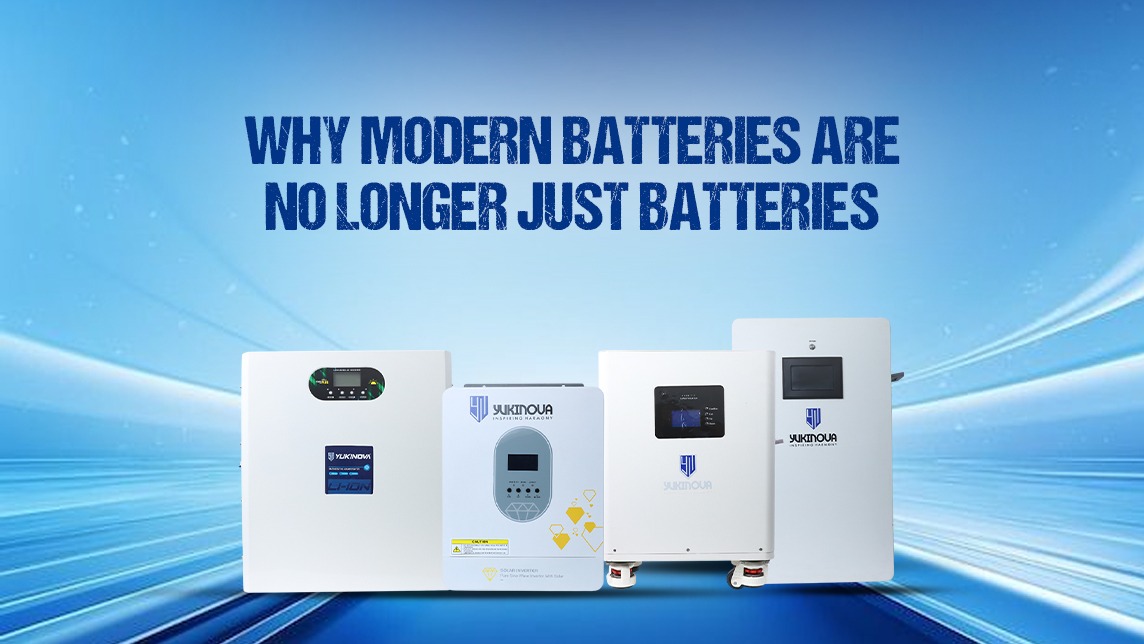
Why Modern Batteries Are No Longer Just Batteries

A few years ago, most people saw a battery as a simple backup product.

The main question was clear.

Will it run the inverter during a power cut?

Can it start the vehicle in the morning?

That was enough for many users.

Today, the story is different. A battery now supports homes, shops, electric vehicles, solar systems, and portable power needs. It does more than store energy.

This is why modern Lithium Ion Batteries have become smarter and more useful. They charge faster, need less care, and support better performance in daily use.

At Yukinova, we see this change closely. Users now want power solutions that are safe, efficient, and easy to depend on.

Old Battery Problems Are No Longer Acceptable

Earlier, users accepted many battery issues as normal.

Slow charging was common. Heavy weight was expected. Regular maintenance was part of ownership. Heating and backup loss were also ignored for a long time.

But users now expect more.

A home needs stable backup. A shop needs power for billing, lights, and internet. An EV user needs better range. A solar user needs proper energy storage.

So, the battery has to work better.

Traditional batteries still have their place. However, many users now prefer lower maintenance, faster charging, and better energy use. This is where Lithium Battery Technology becomes important.

Why Lithium Batteries Changed The Market

Lithium batteries changed the way people think about backup power.

They are lighter than many older battery types. They also charge faster. In addition, they give better usable power when selected properly.

Because of this, Lithium Ion Batteries are now used in many areas. You can find them in inverters, electric scooters, e-rickshaws, portable power stations, and energy storage systems.

A Lithium Ion Battery for Inverter is also becoming a practical choice for modern homes and shops. It helps users get steady backup with less routine care.

This makes lithium batteries useful for people who want power without daily trouble.

Smart Batteries Need Smart Control

Modern batteries do not depend only on cells.

They also need control and protection.

That is where a Battery Management System plays an important role. It checks the battery’s charging, voltage, temperature, and health.

This system helps protect the battery from common risks. These include overcharging, deep discharge, overheating, and voltage imbalance.

As a result, the battery works in a safer and more stable way.

This is a major change in battery design. Users do not want backup only. They also want safety, control, and longer life.

Electric Mobility Needs Better Batteries

Electric mobility is growing in India.

Electric scooters, e-rickshaws, and three-wheelers depend heavily on battery quality. A weak battery can reduce range. It can also increase charging breaks and downtime.

For a rider, this creates stress.

For an e-rickshaw driver, it can reduce daily income.

So, EV batteries need strong design and better protection. A reliable Lithium Ion Battery Manufacturer in India has to focus on real use, not only battery size.

At Yukinova, we build battery solutions for practical needs. These needs include inverter backup, EV use, and energy storage.

Inverter Backup Is Also Changing

Power backup is no longer only about fans and lights.

Today, users also need Wi-Fi, mobile charging, laptops, CCTV, billing machines, and small appliances during power cuts.

So, inverter batteries must also improve.

A Lithium Ion Battery for Inverter can support these needs better. It offers faster charging, better efficiency, and lower maintenance.

This makes it useful for homes, offices, shops, and small businesses.

Also, when the battery works with a strong Battery Management System, the user gets better safety and more stable backup.

The Future Will Be Smarter

The future of batteries will not depend only on storage capacity.

It will also depend on smart features.

Battery systems will give better alerts. They will support remote monitoring. They will also help users check battery health before a major problem starts.

This will reduce guesswork.

Users will not have to wait for backup failure to know something is wrong. Instead, smart systems will help them act early.

This is the direction of Lithium Battery Technology.

Final Thoughts

Batteries are no longer simple power storage units.

They now support mobility, home backup, solar power, and smart energy use. They charge faster and work with better control.

With the help of a good Battery Management System, Lithium Ion Batteries can deliver safer and more reliable performance.

As a Lithium Ion Battery Manufacturer in India, Yukinova focuses on battery solutions for today’s power needs.

Because users no longer want a battery that only stores power.

They want a battery that works smartly, safely, and reliably.

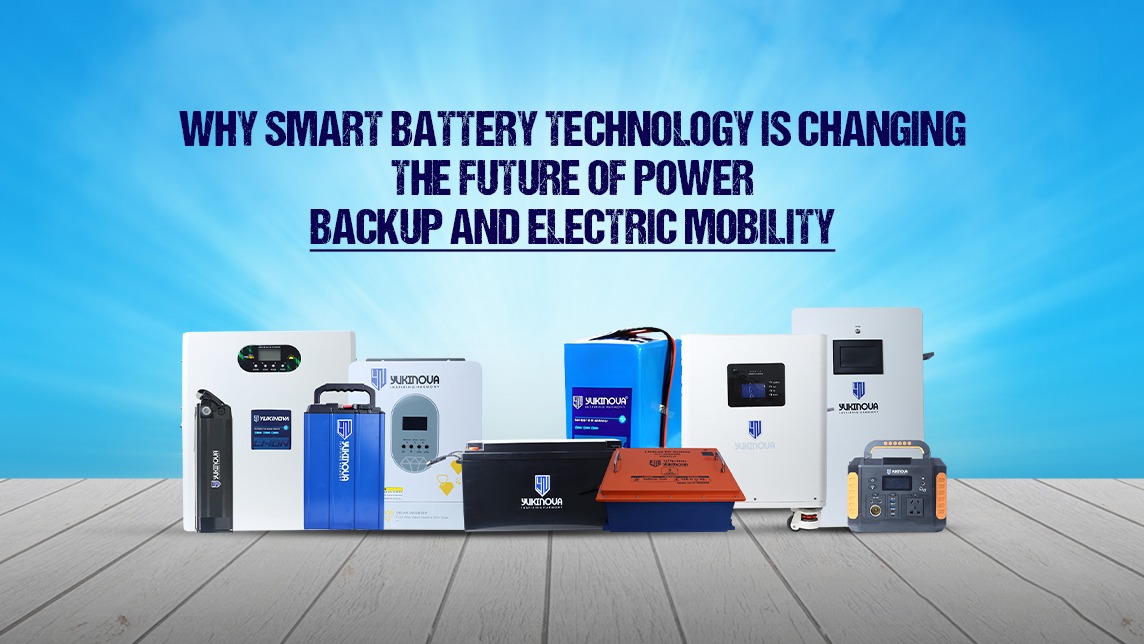
Why Smart Battery Technology Is Changing the Future of Power Backup and Electric Mobility

Advances in battery technology have been taking place very rapidly. Just a few years back, customers were primarily concerned about battery life and their recharge speed. However, today, all these expectations have dramatically changed, and people expect their batteries to be smart, secure, fast, and reliable. This change in expectations will inevitably propel the lithium battery manufacturing sector towards a new technology paradigm that can be referred to as smart battery technology.

In whatever form the modern Lithium Ion Battery takes – be it for an electric scooter, an inverter setup, a portable power station, or even a commercial electric vehicle, this type of a battery no longer represents just an energy reservoir. These batteries are becoming smart units that not only monitor themselves but also optimize power consumption and ensure greater safety.

The Problem with Traditional Battery Systems

Conventional battery systems function quite simply. They accumulate power, provide power supply, and wear out gradually. Most consumers tend to take note of battery problems only when backup has been severely reduced, or the battery fails to function entirely.

This problem causes many difficulties to users. The charge is not always stable, its performance reduces, and it requires additional investments for maintenance. In case of using the battery in commercial purposes, such as e-rickshaws and delivery trucks, failure of the battery directly affects income level.

The outdated batteries have poor cooling capacities, and their charges are also suboptimal. Excessive heating and incorrect charging considerably decrease the battery life cycle. However, modern lithium battery systems solve the problem effectively.

What Makes a Battery “Smart”?

Battery management technology revolves around the efficiency and control of energy inside a battery. Lithium batteries have state-of-the-art BMS that constantly track the status of a battery, the battery voltage, the temperature, the charging process, and even its performance levels.

Not only does this technology help maintain the battery by protecting it from damage, but it also helps to make it operate more efficiently.

A battery automatically controls its charging rate, voltage balance, and overheating when used heavily. This makes for not only a safer battery operation but also greatly extends the battery’s lifespan.

Why This Technology Matters for Electric Vehicles

The advent of electric vehicles is one of the key reasons behind the need for smart battery systems. The functioning of such vehicles as electric scooters, e-rickshaws, and three-wheelers depends upon battery efficiency. Any inefficiency, no matter how slight, can have a negative impact on the range of the vehicle as well as its overall productivity.

Modern battery systems that use lithium ions contribute to maintaining stability in power supply even when vehicles operate for prolonged periods of time. It also leads to increased efficiency in charging, thus reducing the amount of time necessary for charging.

For commercial vehicles, this becomes crucial since any down-time means lost money.

Smart Batteries Are Also Improving Power Backup Systems

It should be noted that smart battery technology affects not only electric cars but also inverter technology and power stations.

In today’s world, customers demand uninterruptible back-up, quick charge rates, and higher energy efficiency even during power shortages. Regular batteries tend to perform poorly during high loads. However, due to improved distribution of energy and continuous battery condition monitoring, the problem can be solved with a smart lithium battery.

As solar energy becomes more popular, smart battery systems become essential in solar energy storage.

Safety Is Becoming a Major Priority

Another major benefit of having advanced lithium battery systems is that they ensure high levels of safety. In previous energy storage systems, battery overheating, overcharging, and short circuits were among the major problems. The Advanced Battery Management System has been invented precisely for such purposes. The system checks the performance of the battery and reacts to any abnormal situation.

This will not only increase the safety of the system but will also protect the battery from any damage. Safety, in today’s world, is no longer a luxury but a necessity while buying batteries-operated products.

The Future of Battery Technology

For the development of battery technology in the future, it is not going to be just about the capacity and speed.

Intelligent and automated systems are equally relevant for future battery technology.

In the coming time, intelligent battery systems will feature battery tracking, prediction alerts, and energy optimization using artificial intelligence.

People are going to have intelligent energy ecosystems that can connect devices and automate the process of energy optimization.

Conclusion

Innovative technologies of batteries are making a revolution in the modern energy sector. Intelligent battery systems with lithium are already being applied in a variety of areas starting from electric transport to inverters. Advanced technologies of intelligent lithium batteries will play an indispensable role in energy industry of the future.

What Should You Choose? Inverter with A Lithium Battery vs Traditional Inverters 

Power outages remain a common occurrence in many areas. In both households and work environments, the type of power source you employ determines the efficiency of the operations. You’ve probably come across the term lithium battery for inverter while exploring options. It’s getting popular but is it actually better than the traditional setup, or just a trend?

Here’s what actually matters when you compare the two.

Understanding the Basics

A traditional inverter setup is what most people are already familiar with. It uses a separate battery, usually lead acid or tubular battery connected to an inverter. It works, but it also comes with limitations like maintenance, space requirements, and performance degradation over time.

Now compare that with a newer setup. An inverter paired with a lithium battery for inverter is built differently from traditional systems. The battery is either integrated or designed to work seamlessly with the inverter, making the overall setup more compact and efficient.

On paper, both systems serve the same purpose. In real use, the difference becomes noticeable.

What Actually Sets Them Apart

Space and Setup

Traditional systems take up more room than expected. You need space not just for the inverter, but also for the battery, along with proper ventilation.

With a lithium battery for inverter, the setup is far more compact. This makes it easier to install and manage, especially in smaller homes or offices.

Maintenance 

If you’ve used a lead acid battery before, you already know the routine checking water levels, dealing with corrosion, and regular upkeep.

That entire process is largely eliminated with a lithium battery for inverter. It does not require routine maintenance like water topping, although basic care (such as proper usage conditions) is still important.

Charging and Daily Performance

Traditional batteries take longer to charge, and their performance tends to decline as they age.

Lithium systems behave differently. A lithium battery for inverter charges faster and delivers more consistent power output over time. This stability is one of the key reasons users prefer it.

Lifespan

That is when the gap starts showing its effects.

Lead acid battery has a lifetime of 3 to 5 years, whereas lithium battery that powers an inverter generally has a life span of 8 to 12 years.

The actual number of years may differ according to use and temperature.

Safety

Old batteries may get overheated or emit gases if they are not looked after properly.

The lithium system batteries come with an in built Battery Management System (BMS), which looks after the functioning of the battery and minimizes any hazards like overcharging and overheating. A lithium battery for inverters is relatively safe to use normally.

So, Why Are People Switching?

It mostly comes down to convenience and long term value.

A lithium battery for inverter makes sense if you:

  • Don’t want to deal with regular maintenance
  • Prefer a compact and cleaner setup
  • Need faster charging
  • Are planning for long term use rather than short term savings

It’s less about trend and more about practicality.

When a Traditional System Still Works

That said, traditional inverter systems are still relevant.

They can be a suitable option if:

  • You are working with a tight initial budget
  • You already own compatible batteries
  • You don’t mind periodic maintenance

For short term or limited use, they can still be effective.

Cost vs What You Actually Get

This is where most people hesitate.

Yes, a lithium battery for inverter has a higher upfront cost. However, that’s only part of the picture.

When you consider:

  • Longer lifespan
  • Minimal maintenance costs
  • Better efficiency

…the total cost of ownership over time is often lower compared to traditional systems.

Final Take

If you’re looking for a short term, budget friendly solution, a traditional inverter system can still work.

But if you want something that lasts longer, requires less effort to maintain, and delivers consistent performance, a lithium battery for inverter is the more practical choice.

The shift toward lithium based systems is largely driven by better long term usability and efficiency.

FAQs

1. What is a lithium battery for inverter?

It is a battery that uses lithium ion technology to store energy and provide backup power more efficiently than traditional lead acid options.

2. How long does a lithium battery for inverter last?

It typically lasts around 8 to 12 years under normal usage conditions, although actual lifespan may vary.

3. Does it require maintenance?

It does not require routine maintenance like water topping, but basic care and proper usage are still important.

4. Can it be used with solar systems?

Yes, it is compatible with solar setups, including hybrid and off grid systems.

5. Is it worth the higher cost?

For long term use, the improved lifespan, efficiency, and reduced maintenance often justify the higher initial investment.

Lithium Battery for Inverter Explained

In today’s modern lifestyle uninterrupted power is a necessity. Be it a residential area, offices, or even a business establishment, the importance of an inverter system during a power outage is immense. Though batteries have been the traditional source of power backup in the past, the Lithium Battery for Inverter solutions offered by Yukinova are now the benchmarks for performance and efficiency.

Understanding Lithium Battery for Inverter

A Lithium Battery for Inverter is a battery that utilizes the latest lithium-ion or LiFePO₄ battery technology and a sophisticated Battery Management System (BMS).

With the innovation-oriented strategy of Yukinova, the Lithium Battery for Inverter is designed to provide consistent and optimized power backup for the needs of the present day.

Lower Maintenance – Hassle-Free Power

Traditional batteries usually need frequent maintenance such as water refilling, terminal cleaning, and checking. All these processes not only take a lot of time but also contribute to the costs.

Yukinova lithium batteries are:

  • Completely maintenance-free
  • Spill-proof and sealed
  • Safe for indoor usage

Once installed, they operate smoothly without any manual intervention, offering a truly hassle-free experience.

Longer Life – Built to Last

One of the greatest benefits of selecting a Lithium Battery for Inverter is its long lifespan.

Traditional Batteries: 3 to 5 Years

Yukinova Lithium Batteries: 8 to 10 Years and More

Due to more cycles of charging and discharging, these batteries can be used for a long time.

Higher Savings – Smart Investment

While the upfront cost of lithium batteries may be higher, the long-term savings are significant:

  • Zero maintenance expenses
  • Higher efficiency (less energy loss)
  • Fewer replacements over time

Over its lifecycle, a Yukinova lithium battery proves to be more cost-effective than conventional alternatives.

Enhanced Safety – Designed for Protection

Safety is a top priority in Yukinova’s battery design. The built-in BMS provides protection against:

  • Overcharging and deep discharge
  • Overheating
  • Short circuits and overloads

In addition, there is no emission of noxious gases from lithium batteries, which makes them suitable for domestic and indoor use.

Faster Charging & Better Performance

Yukinova lithium batteries offer:

  • Faster charging times
  • Up to 90–95% usable capacity
  • Stable and consistent power output

Compared to traditional batteries, this ensures longer backup and improved energy utilization. They are also highly compatible with solar and hybrid inverter systems.

Why Choose Yukinova Lithium Battery for Inverter?

Switching to Yukinova means choosing:

  • Maintenance-free convenience
  • Long-lasting performance
  • Advanced safety feature
  • Greater energy efficiency
  • Long-term cost savings

Conclusion

The future of power backup lies in lithium technology. A Lithium Battery for Inverter from Yukinova offers the perfect combination of performance, safety, and savings.

Upgrade today and experience smarter, cleaner, and more reliable power for years to come with Yukinova.

Mistakes Customers Make While Buying Inverters and Batteries

Most inverter and battery problems do not begin after installation. They begin at the buying stage. When purchases are made in urgency rather than careful consideration. These rushed decisions will cause long term performance issues. This is especially the case when the lithium battery is selected based on assumptions and not actual facts.

Many people will rely on random suggestions, price comparisons and word of mouth instead of evaluating how much power is actually needed in their homes. And soon this gap between your assumption and reality become obvious when backup becomes inconsistent and battery wears faster

1. Mistaking Higher Capacity for Better Backup

One of the most common mistakes involves capacity selection. Many customers assume that a higher Ah rating automatically guarantees longer backup. In reality, capacity works only when matched correctly to the connected load.

When appliances draw power unevenly, batteries discharge faster than expected. Consequently, even large systems feel inadequate. Customers who calculate actual usage before buying experience far more reliable performance, regardless of battery size.

For example, many households choose a higher capacity battery assuming it will support all appliances during outages. However, when lights, fans, a refrigerator, and occasionally high load appliances run together without planning, backup time drops sharply. The issue is not battery size, it is unrealistic load expectation.

2. Ignoring Daily Power Usage Patterns

Not all power cuts behave the same way. Some households face frequent short outages. Others experience long evening interruptions. However, many buyers ignore this distinction entirely during inverter battery buying decisions.

A lithium battery for inverter performs best when usage patterns align with its operating design. Frequent deep discharges without structured recharging reduce efficiency over time. Therefore, understanding how and when power gets used matters as much as the technology itself.

3. Overlooking Installation Environment

Installation conditions rarely receive attention while choosing the right inverter battery. Batteries often end up placed in tight corners, poorly ventilated rooms, or areas exposed to heat. Over time, these conditions quietly reduce efficiency.

Lithium inverter battery systems handle energy efficiently, but heat buildup still affects internal balance. Proper airflow and correct placement preserve performance without any additional investment. This detail often separates long lasting systems from disappointing ones.

4. Letting Price Decide Everything

Price comparison feels logical at the buying stage. However, price only decisions often lead to regret later. Customers sometimes compromise on quality to reduce upfront cost. As a result, maintenance expenses increase over time.

Long term reliability always proves more valuable than short-term savings, especially for systems expected to perform daily during power interruptions.

5. Assuming Technology Eliminates User Responsibility

Advanced technology simplifies operation, but it does not remove responsibility. Many buyers believe lithium systems require no attention. This belief leads to careless load management and irregular charging habits.

Lithium battery for inverter solutions deliver excellent efficiency. However, proper charging routines and sensible load distribution remain essential. When users engage responsibly, performance stays predictable and consistent.

Why Informed Buying Changes Everything

Yukinova designs lithium batteries for inverter solutions around real household usage conditions, not just brochure specifications. When buying decisions are informed by actual load, usage timing, and environment, systems perform the way users expect them to.

Customers who buy with clarity experience fewer surprises. They plan loads. They respect operating guidelines. As a result, backup performance remains steady rather than inconsistent.

Conclusion: Reliability Begins at the Decision Stage

Most inverter and battery problems begin at the purchase stage, not years later. Mistakes made early shape performance for the entire life cycle.

Lithium battery for inverter technology offers excellent efficiency and longevity. Yet, its value appears only when customers choose wisely. Yukinova combines reliable engineering with practical guidance ensuring power backup performs reliably because the right decisions were made at the buying stage.

Understand how choosing the right lithium battery for inverter and planning usage correctly improves long-term backup performance in Indian homes.

FAQs

Q1. What is the most common mistake while buying an inverter battery?

Ignoring actual load requirements and daily usage patterns.

Q2. Is lithium battery for inverter suitable for Indian homes?

Yes, when selected correctly and used according to real power conditions.

Q3. How does Yukinova support long-term reliability?

Yukinova designs systems for real usage conditions and guides customers toward informed buying decisions.

Yukinova Lithium Battery for Inverters – Energizing the Energy Future

In the modern era, continuous power is no longer a luxury but an imperative. Be it for homes, offices, or small enterprises, inverters are the key to providing uninterrupted power supply in the event of outages. Historically, lead-acid batteries have been the stalwarts of inverter units, but they have disadvantages in terms of large size, regular maintenance, and limited lifespan. Yukinova Lithium Battery for Inverters emerge as the intelligent and eco-friendly alternative in this context.

Why Choose Yukinova Lithium Battery?

Yukinova, a trusted name in energy solutions, offers advanced lithium-ion (LiFePO₄) batteries designed to maximize performance, safety, and durability. Unlike conventional batteries, Yukinova lithium battery are lightweight, maintenance-free, and offer up to 6,000 charge cycles, making them a long-term investment.

Key Advantages of Yukinova Lithium Batteries

Longer Backup & Quick Charging

Yukinova lithium battery give a reliable backup, ensuring your inverter keeps working fine even during longer power failures. With their quick charging feature, they are once more ready to work in less time.

Long Life Cycle & Durability

Unlike 2–3-year lead-acid batteries, Yukinova lithium battery have a lifespan of 7–10 years, reducing replacements and amounting to greater savings.

Space-Saving & Compact Design

The thin profile of Yukinova lithium battery is ideal for today’s offices and homes with precious floor space. Without taking up more space, they offer greater energy density and efficiency.

Safe & Reliable Technology

They are LiFePO₄ chemistry-powered batteries with advanced safety features including overcharge, over-heat, and short-circuit protection. This means carefree use even in mission-critical applications.

Eco-Friendly Solution

With reduced carbon footprint and improved energy efficiency, these batteries are eco-friendly, a perfect fit for the current requirement of green power solutions.

Uses of Yukinova Lithium Inverter Batteries

Domestic Use: Smooth backup for the home, providing comfort during power cuts.

Commercial Use: Ideal for offices, shops, and small businesses who cannot afford to spend time off.

Solar Compatibility: Perfect for hybrid solar inverter systems, providing effective storage and utilization of solar power.

Why Yukinova Is Different

Yukinova’s reputation in the battery industry is gained through innovation and reliability. Their lithium battery are not just about prolonged backup but about delivering consistent performance, avoiding the headache of regular maintenance, and bringing about peace of mind. With Yukinova, you’re not just buying power with a longer lifespan but also with better performance.

Frequently Asked Questions (FAQs)

1. How long will a Yukinova lithium inverter battery last?

Yukinova lithium batteries last much longer than ordinary lead-acid batteries, providing dependable backup for years.

2. Is it safe to use Yukinova lithium battery in the home?

Yes. They have integrated safety features such as overcharge protection, thermal control, and short-circuit protection, which guarantee consistent performance.

3. Is it possible to use Yukinova lithium battery with solar inverters?

Yes. They are made for use with both grid and solar inverter systems, making them ideal for hybrid energy solutions.

4. Why are they superior to lead-acid batteries?

They provide quicker charging, longer life, compact design, no maintenance, and environmentally friendly operation than conventional lead-acid batteries.

5. Are Yukinova lithium batteries maintenance-free?

Yes. They are entirely maintenance-free and do not require the frequent water topping and inspection needed for lead-acid batteries.

Final Thought Yukinova Lithium Battery for Inverters are a potent combination of performance, safety, and sustainability. They are the ideal solution for anyone looking for low-maintenance backup power with extended lifespan. When you choose Yukinova, you’re not simply purchasing a battery—you’re investing in an energy solution for the future.