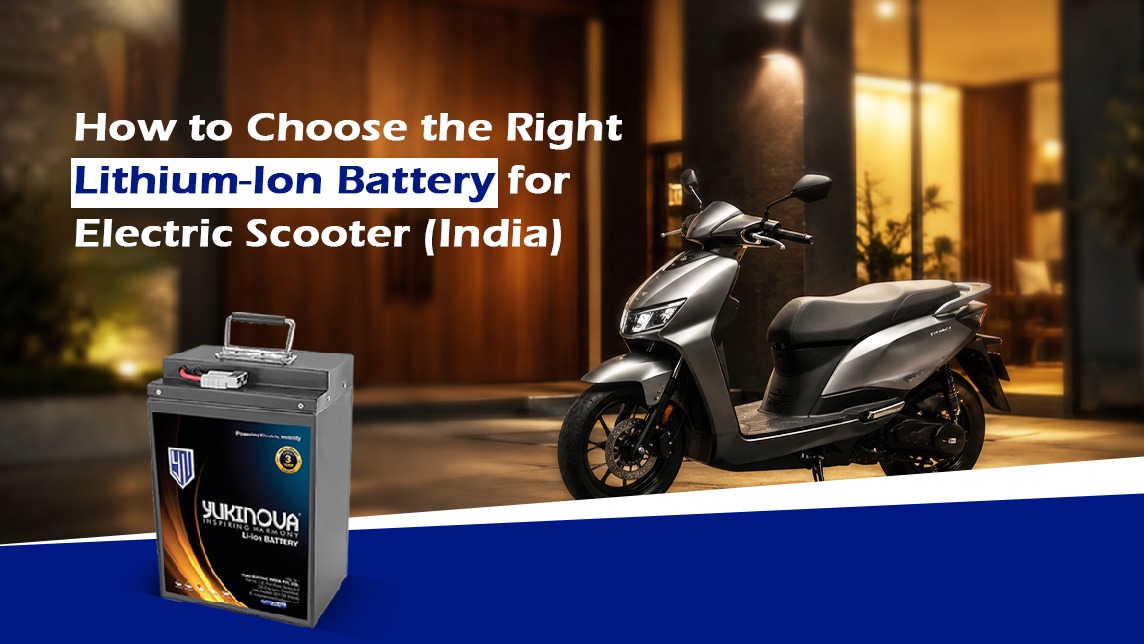
How to Choose the Right Lithium-Ion Battery for Electric Scooter (India)

Choosing the right lithium ion battery for electric scooter setups doesn’t have to be confusing, even though it looks that way at first. Spec sheets can make everything feel technical, but when you’re actually riding every day, only a few things really matter.

You usually don’t think much about the battery until something goes wrong. Like when the scooter starts losing power in traffic or struggles a bit on longer routes. That’s when it becomes obvious what actually matters and what doesn’t.

In this guide by Yukinova, you will be a more educated in the matter of choosing proper batteries.

Why Lithium-Ion Is the Better Choice

When selecting a lithium ion battery for electric scooter, it’s generally better to avoid older lead-acid options. They seem cheaper at first, sure, but that advantage doesn’t last very long.

They’re heavier, for one. And over time, you’ll notice the performance dropping—sometimes faster than you’d expect.

Lithium-ion batteries feel different in day-to-day use. The scooter feels lighter, more responsive, especially in stop-start traffic. It’s not a dramatic change instantly, but over a few days, you start noticing it.

Understanding Voltage and Capacity

For any lithium ion battery for electric scooter setup, matching the specifications is important. There’s not really a workaround here.

Voltage (V) affects how the scooter behaves, especially when you accelerate. If it’s not within the right range, things just don’t feel smooth.

Capacity (Ah or Wh) is what determines how far you can go. But real-world range is almost always lower than what’s advertised. Traffic, braking, road conditions—it all adds up.

So in most cases, going slightly above your minimum requirement makes sense. It just gives you a bit of breathing room.

Choosing the Right Size

A bigger battery might seem like a straightforward upgrade. More capacity, more range—that’s the assumption.

But it doesn’t always work out that way.

Extra weight can make the scooter feel awkward, especially when you’re parking or moving it around manually. In daily use, that becomes noticeable pretty quickly.

For shorter commutes, a balanced setup usually feels better than just going for the biggest option available.

Performance Under Load

This is something people often don’t think about in the beginning.

A lithium ion battery for electric scooter might look good on paper, but what matters is how it performs under load. Situations like climbing a flyover, carrying someone with you, or even quick acceleration in traffic.

That’s where weaker batteries start showing their limits.

If the power delivery isn’t steady, the scooter feels underpowered—even if the charge is full. That’s why discharge capability matters more than it seems at first.

Compatibility

Before buying a lithium ion battery for electric scooter, it’s worth taking a few minutes to check if everything lines up properly.

Things like:

  • Physical dimensions
  • Connector type
  • Mounting alignment

Even a small mismatch can turn into a headache later. Temporary fixes usually don’t stay temporary.

Heat Management and Safety

Heat is one of those things people ignore until it becomes a problem.

In Indian conditions, especially during summer, batteries go through a lot—slow traffic, long rides, direct sunlight. All of it adds stress.

A proper Battery Management System (BMS) helps here. It handles things like overheating, overcharging, and short circuits in the background. You don’t really notice it working, but it makes a difference.

Why Cell Quality Matters

Not all batteries age the same way.

Some hold their performance well even after months of use. Others start dropping off gradually—less range, less consistency. It’s not always obvious at first, but it shows up over time. 

That’s usually down to cell quality. Better cells just tend to stay reliable for longer.

Purchasing from reliable brands like Yukinova ensures proper performance and long term reliability.

What to Expect After Installation

Once you install a new lithium ion battery for electric scooter, the difference doesn’t hit you instantly.

It shows up over a few rides.

You start noticing how far it goes in your regular routine, how it behaves in traffic, whether the power feels consistent or not. Those small things give a clearer picture than any spec sheet.

Final Thoughts

The best lithium ion battery for electric scooter isn’t necessarily the one with the highest numbers.

It’s the one that fits how you actually use your scooter.

If it’s reliable, gives you enough range, and doesn’t feel inconsistent in daily riding, that’s what really matters. Everything else is secondary.

And when in doubt you can always reach out to our distributors and they will guide you even more thoroughly.
When Should A Home Move From Basic Backup To An Energy Storage System?

Most homes start with a simple inverter setup.

One inverter. One battery. Enough backup for lights, fans, Wi-Fi, and maybe a few small appliances. For many homes, that works fine.

But after some time, the need changes.

Power cuts become longer. Work-from-home starts. Children need online classes. CCTV, routers, laptops, TV, and kitchen appliances get added. Some homes also install solar panels. Slowly, the old backup system starts feeling small.

That is when a home should start thinking beyond basic backup and look at an energy storage system battery or hybrid solar inverter.

When Basic Backup Is Enough

A normal inverter setup is fine when the power need is small.

If you only want lights, fans, and basic charging during short power cuts, you may not need a bigger system. A good lithium battery for inverter can handle this kind of home backup well when it matches the load properly.

Yukinova offers lithium batteries for inverter use for homes and small offices, with focus on faster charging, lower maintenance, stable backup, and longer service life compared to regular battery options.

So, for simple backup, do not overcomplicate things. First check your actual load. If the battery handles it comfortably, basic backup is enough.

When You Need More Than An Inverter

The problem starts when your backup need becomes bigger than the system.

For example, if your inverter struggles during every power cut, backup drops too fast, or the battery does not charge properly before the next outage, the system may be undersized.

This happens often when homes add more devices but never upgrade the backup setup.

A laptop here. A router there. CCTV later. Then maybe a bigger fan load or small appliance. The inverter battery keeps taking more pressure.

At this stage, an energy storage system battery makes more sense. It gives better planning for bigger loads, longer backup, and smoother power use.

When Hybrid Solar Inverter Comes Into The Picture

Solar changes the whole backup discussion.

Panels produce power during the day. But without proper storage, that power may not help much at night or during outages. This is where a hybrid solar inverter becomes useful.

A hybrid solar inverter manages solar power, battery storage, and grid supply together. Yukinova lists hybrid solar inverter models such as 4KVA, 6.2KVA, and 11KVA options.

So, if a home already has solar or plans to install solar, it should not think only about panels. It should think about storage too.

Solar without storage can reduce bills.

Solar with storage can improve backup.

When Shops And Home Offices Need Stability

This is not only for big houses.

Small shops and home offices also need stable power. A shop may need lights, billing machines, CCTV, and phone charging. A home office may need Wi-Fi, laptop charging, lighting, and backup during meetings.

If power failure stops work, then backup is not just comfort. It becomes part of daily productivity.

In such cases, Yukinova’s inverter battery and hybrid inverter options can help users build a better power setup based on actual load and future needs. Yukinova’s product range includes hybrid inverters, inverter batteries, portable power, and other lithium battery solutions.

Final Thoughts

A basic inverter is enough for small backup needs.

But if your home has higher load, frequent power cuts, solar panels, or work-from-home pressure, it may be time to move toward an energy storage system.

Do not upgrade by guesswork.

Check your load. Check backup time. Check charging source. Check whether solar is part of the plan.

The right system should do one simple thing well: keep power available when your home actually needs it.

What Should You Choose? Inverter with A Lithium Battery vs Traditional Inverters 

Power outages remain a common occurrence in many areas. In both households and work environments, the type of power source you employ determines the efficiency of the operations. You’ve probably come across the term lithium battery for inverter while exploring options. It’s getting popular but is it actually better than the traditional setup, or just a trend?

Here’s what actually matters when you compare the two.

Understanding the Basics

A traditional inverter setup is what most people are already familiar with. It uses a separate battery, usually lead acid or tubular battery connected to an inverter. It works, but it also comes with limitations like maintenance, space requirements, and performance degradation over time.

Now compare that with a newer setup. An inverter paired with a lithium battery for inverter is built differently from traditional systems. The battery is either integrated or designed to work seamlessly with the inverter, making the overall setup more compact and efficient.

On paper, both systems serve the same purpose. In real use, the difference becomes noticeable.

What Actually Sets Them Apart

Space and Setup

Traditional systems take up more room than expected. You need space not just for the inverter, but also for the battery, along with proper ventilation.

With a lithium battery for inverter, the setup is far more compact. This makes it easier to install and manage, especially in smaller homes or offices.

Maintenance 

If you’ve used a lead acid battery before, you already know the routine checking water levels, dealing with corrosion, and regular upkeep.

That entire process is largely eliminated with a lithium battery for inverter. It does not require routine maintenance like water topping, although basic care (such as proper usage conditions) is still important.

Charging and Daily Performance

Traditional batteries take longer to charge, and their performance tends to decline as they age.

Lithium systems behave differently. A lithium battery for inverter charges faster and delivers more consistent power output over time. This stability is one of the key reasons users prefer it.

Lifespan

That is when the gap starts showing its effects.

Lead acid battery has a lifetime of 3 to 5 years, whereas lithium battery that powers an inverter generally has a life span of 8 to 12 years.

The actual number of years may differ according to use and temperature.

Safety

Old batteries may get overheated or emit gases if they are not looked after properly.

The lithium system batteries come with an in built Battery Management System (BMS), which looks after the functioning of the battery and minimizes any hazards like overcharging and overheating. A lithium battery for inverters is relatively safe to use normally.

So, Why Are People Switching?

It mostly comes down to convenience and long term value.

A lithium battery for inverter makes sense if you:

  • Don’t want to deal with regular maintenance
  • Prefer a compact and cleaner setup
  • Need faster charging
  • Are planning for long term use rather than short term savings

It’s less about trend and more about practicality.

When a Traditional System Still Works

That said, traditional inverter systems are still relevant.

They can be a suitable option if:

  • You are working with a tight initial budget
  • You already own compatible batteries
  • You don’t mind periodic maintenance

For short term or limited use, they can still be effective.

Cost vs What You Actually Get

This is where most people hesitate.

Yes, a lithium battery for inverter has a higher upfront cost. However, that’s only part of the picture.

When you consider:

  • Longer lifespan
  • Minimal maintenance costs
  • Better efficiency

…the total cost of ownership over time is often lower compared to traditional systems.

Final Take

If you’re looking for a short term, budget friendly solution, a traditional inverter system can still work.

But if you want something that lasts longer, requires less effort to maintain, and delivers consistent performance, a lithium battery for inverter is the more practical choice.

The shift toward lithium based systems is largely driven by better long term usability and efficiency.

FAQs

1. What is a lithium battery for inverter?

It is a battery that uses lithium ion technology to store energy and provide backup power more efficiently than traditional lead acid options.

2. How long does a lithium battery for inverter last?

It typically lasts around 8 to 12 years under normal usage conditions, although actual lifespan may vary.

3. Does it require maintenance?

It does not require routine maintenance like water topping, but basic care and proper usage are still important.

4. Can it be used with solar systems?

Yes, it is compatible with solar setups, including hybrid and off grid systems.

5. Is it worth the higher cost?

For long term use, the improved lifespan, efficiency, and reduced maintenance often justify the higher initial investment.

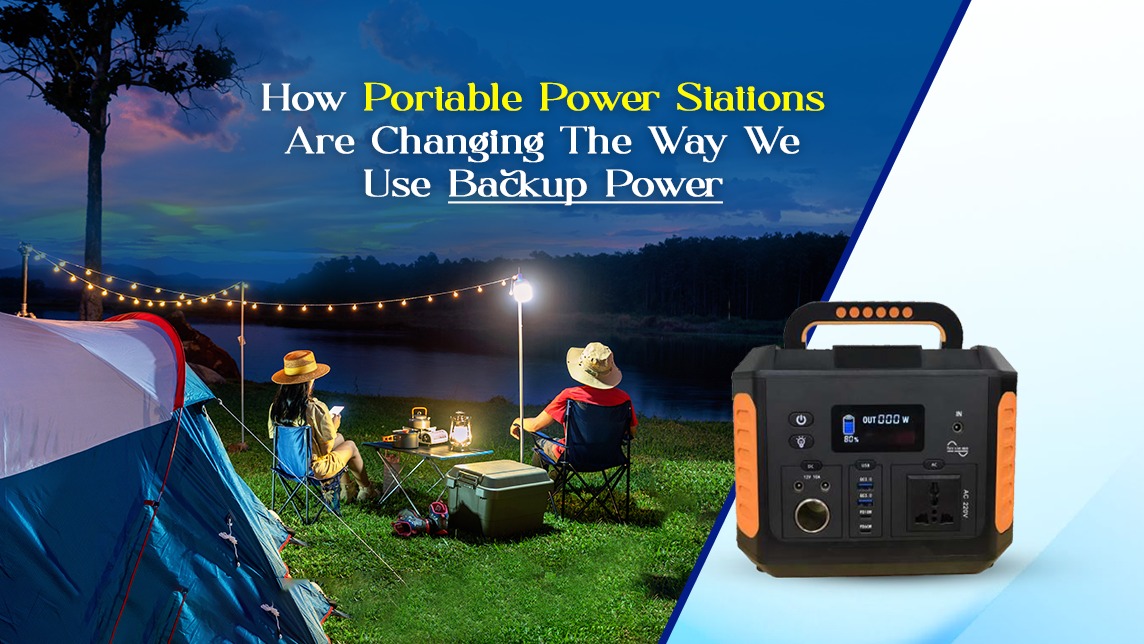
How Portable Power Stations Are Changing The Way We Use Backup Power

Power backup used to be simple.

One inverter at home. One battery in the corner. Lights and fans running during a power cut.

But now the need is different.

Your laptop may need charging during work. Wi-Fi may go down during a meeting. A shop may need its QR scanner or billing device. Someone travelling may need power for a phone, camera, light, or small appliance. And sometimes, the problem is very basic: there is no socket where you need one.

That is where a Portable Power Station becomes useful.

It gives power that can move with you.

Not every backup system has to sit fixed near a wall. Sometimes you need something you can charge, carry, and use wherever the work is happening.

Backup That Does Not Stay In One Place

A normal inverter setup is good for the house. It sits in one place and supports fixed loads.

But a portable power station works differently.

You can use it during travel, outdoor work, camping, small events, shop use, or emergency power cuts. It can support phones, laptops, lights, routers, cameras, and small devices, depending on the model capacity.

This is not the same as a small power bank.

A power bank mostly saves your phone. A portable power station can support bigger needs.

For example, if power goes off during office work, you may only need Wi-Fi and laptop charging for a few hours. A full inverter setup may not be needed there. A portable unit can handle that kind of situation better.

Yukinova offers portable power options for people who need backup that is easy to move and use.

Where It Beats A Fixed Backup Setup

Fixed backup has its place. No doubt.

If you want to run home lights, fans, and basic appliances during regular power cuts, a Lithium Ion Battery for Inverter makes more sense. It stays connected to the inverter and supports the home setup.

But what if the power need keeps changing?

Today you need backup in your room. Tomorrow you need it at the shop. On the weekend, maybe you need it while travelling. A fixed inverter cannot follow you.

A portable power station can.

That is the real value. Not just battery capacity. Movement.

Yukinova provides both portable power and lithium inverter battery solutions, so the right choice depends on how you use power in daily life.

Do Not Buy Only By Big Numbers

Many people see wattage and battery size first.

That is fine, but it is not enough.

Check what you actually want to run. A phone, laptop, and router need less power. A fan, light, or small appliance needs more. Also check ports, charging time, weight, safety, and whether solar charging matters for you.

Buying too small will disappoint you.

Buying too big may waste money.

The right unit is the one that fits your actual use.

Final Thoughts

Portable power stations are useful because power needs are no longer fixed.

Work moves. Travel happens. Shops need small backup. Homes need emergency support. Outdoor users need power where sockets are not available.

For fixed home backup, a lithium inverter battery is still the better choice.

But for backup that moves with you, a portable power station is the practical option.

FAQs

1. What Is A Portable Power Station?

It is a rechargeable power unit that can run or charge devices without a wall socket.

2. Can I Use It During Power Cuts?

Yes. You can use it for phones, lights, laptops, routers, and small devices.

3. Is It The Same As A Lithium Ion Battery For Inverter?

No. An inverter battery stays fixed. A portable power station can move with you.

4. Who Should Use A Portable Power Station?

Travellers, shop owners, students, outdoor workers, campers, and people needing emergency backup.5. What Should I Check Before Buying?

Check capacity, ports, charging time, weight, safety, and the devices you want to run.

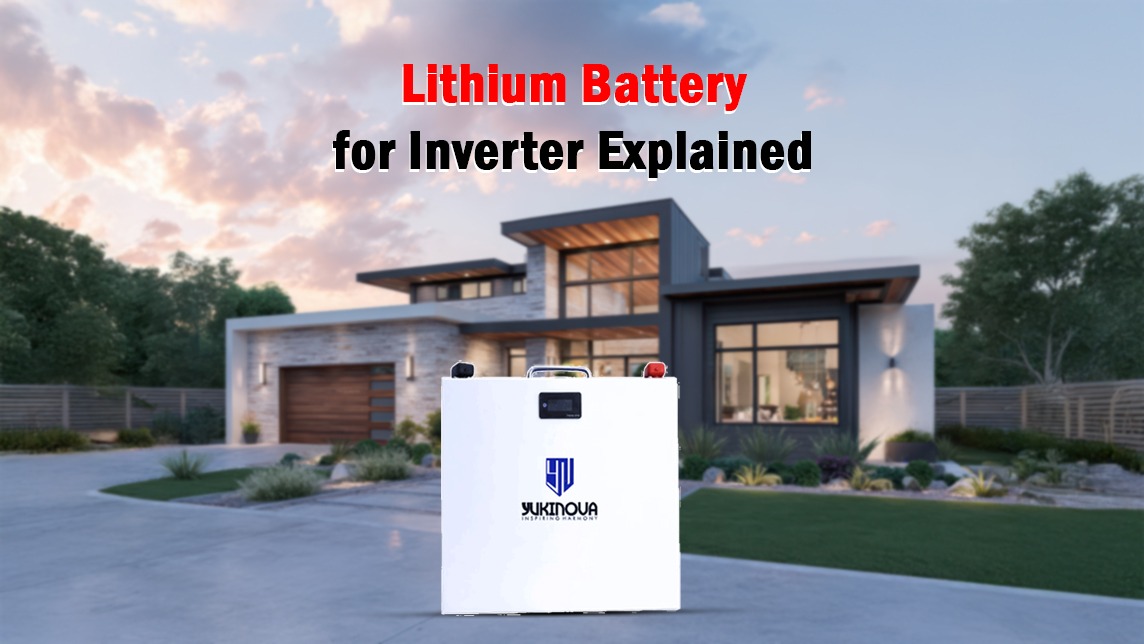
Lithium Battery for Inverter Explained

In today’s modern lifestyle uninterrupted power is a necessity. Be it a residential area, offices, or even a business establishment, the importance of an inverter system during a power outage is immense. Though batteries have been the traditional source of power backup in the past, the Lithium Battery for Inverter solutions offered by Yukinova are now the benchmarks for performance and efficiency.

Understanding Lithium Battery for Inverter

A Lithium Battery for Inverter is a battery that utilizes the latest lithium-ion or LiFePO₄ battery technology and a sophisticated Battery Management System (BMS).

With the innovation-oriented strategy of Yukinova, the Lithium Battery for Inverter is designed to provide consistent and optimized power backup for the needs of the present day.

Lower Maintenance – Hassle-Free Power

Traditional batteries usually need frequent maintenance such as water refilling, terminal cleaning, and checking. All these processes not only take a lot of time but also contribute to the costs.

Yukinova lithium batteries are:

  • Completely maintenance-free
  • Spill-proof and sealed
  • Safe for indoor usage

Once installed, they operate smoothly without any manual intervention, offering a truly hassle-free experience.

Longer Life – Built to Last

One of the greatest benefits of selecting a Lithium Battery for Inverter is its long lifespan.

Traditional Batteries: 3 to 5 Years

Yukinova Lithium Batteries: 8 to 10 Years and More

Due to more cycles of charging and discharging, these batteries can be used for a long time.

Higher Savings – Smart Investment

While the upfront cost of lithium batteries may be higher, the long-term savings are significant:

  • Zero maintenance expenses
  • Higher efficiency (less energy loss)
  • Fewer replacements over time

Over its lifecycle, a Yukinova lithium battery proves to be more cost-effective than conventional alternatives.

Enhanced Safety – Designed for Protection

Safety is a top priority in Yukinova’s battery design. The built-in BMS provides protection against:

  • Overcharging and deep discharge
  • Overheating
  • Short circuits and overloads

In addition, there is no emission of noxious gases from lithium batteries, which makes them suitable for domestic and indoor use.

Faster Charging & Better Performance

Yukinova lithium batteries offer:

  • Faster charging times
  • Up to 90–95% usable capacity
  • Stable and consistent power output

Compared to traditional batteries, this ensures longer backup and improved energy utilization. They are also highly compatible with solar and hybrid inverter systems.

Why Choose Yukinova Lithium Battery for Inverter?

Switching to Yukinova means choosing:

  • Maintenance-free convenience
  • Long-lasting performance
  • Advanced safety feature
  • Greater energy efficiency
  • Long-term cost savings

Conclusion

The future of power backup lies in lithium technology. A Lithium Battery for Inverter from Yukinova offers the perfect combination of performance, safety, and savings.

Upgrade today and experience smarter, cleaner, and more reliable power for years to come with Yukinova.

How to Choose the Best Inverter Battery for Your Home in 2026

Buying an inverter battery used to be a simple pick one that fits the budget and you’re done. But in 2026, things have changed. Homes run way more devices than before, television, WiFi routers, computers and some people even run small offices inside their homes. Because of that, choosing the best inverter battery isn’t just about backup anymore it’s about performance, efficiency, and long term value.

Brands like Yukinova are focusing on smarter and longer lasting battery solutions to match modern home needs. Before checking the inverter battery price, it helps to understand what actually makes a battery right for your home.

Let’s walk through the important things you should look at before buying.

Why Choosing the Right Inverter Battery Matters

An inverter battery is the heart of your backup system. If the battery isn’t strong enough, your backup time drops. If it’s not efficient, charging takes longer and performance goes down over time.

The best inverter battery should:

  • Support your daily power usage
  • Charge efficiently
  • Last for years without frequent maintenance

Choosing the right one also helps you avoid replacing batteries again and again.

Types of Inverter Batteries for Homes

Before comparing the inverter battery price, you should know the three common types available in the market.

Lead Acid Batteries

These are the traditional batteries many homes used earlier. They are affordable but need regular maintenance like water topping.

Tubular Batteries

Tubular batteries are more durable than basic lead acid batteries. They provide longer backup and are suitable for areas with frequent power cuts.

Lithium Batteries

Lithium batteries have gained more popularity in these years. They are faster to charge, more durable and last longer. While the inverter battery price may be higher initially, the long term value is often better.

How to Calculate Battery Backup for Your Home

A simple way to choose the best inverter battery is by checking how much load your home uses during a power cut.

For example:

  • 3 Fans
  • 5 LED lights
  • 1 WiFi router
  • 1 TV

This setup usually needs a medium capacity battery. If you also need to use more appliances then you may need higher capacity.

It is always advisable to go over your estimated requirements and get the battery with a slightly higher capacity than the one you need.

Understanding Inverter Battery Price in 2026

The inverter battery price depends on several factors:

  • Battery type (Lithium, Tubular, Lead Acid)
  • Capacity (Ah rating)
  • Brand quality
  • Warranty period

Lead acid batteries are usually the cheapest. Tubular batteries are more towards a mid range and lastly the lithium batteries cost the highest at the start but save you a lot of money on the long run by minimizing the maintenance costs.

Rather than making your whole decision based on just the price, you should go for something that is reliable and more durable and highly rated.

Lithium vs Tubular: Which One Should You Choose?

Both are popular choices for homeowners.

Tubular batteries

  • Good for frequent power cuts
  • Reliable backup
  • Moderate maintenance

Lithium batteries

  • Fast charging
  • Lightweight design
  • Zero maintenance
  • Longer lifespan

If your goal is long term performance with minimal effort, lithium is becoming the preferred option for the best inverter battery category.

Key Features to Look for in the Best Inverter Battery

When comparing options, keep an eye on these features:

  • Fast charging capability
  • Long backup performance
  • Low maintenance design
  • Safety protection systems
  • Warranty support

These factors matter more than just the inverter battery price, especially if you plan to use the battery for many years.

Common Mistakes to Avoid When Buying an Inverter Battery

Choosing only based on price
The cheapest option may not give the best performance.

Ignoring home load requirements
Always calculate how many appliances you’ll run.

Not checking compatibility with the inverter
Make sure the battery works properly with your existing inverter setup.

Skipping warranty details
A longer warranty usually means better reliability.

FAQ

1. What determines the price of an inverter battery?

Battery type, capacity, and warranty period are some of the major factors.

2. Shall I spend more and get a lithium inverter battery?

Yes.They might cost more upfront but in the long run they save a lot by minimizing maintenance costs.

3. What’s the general life for an inverter battery?

Tubular batteries last about 4 to 6 years while lithium batteries last much longer depending on how you use them.

4. How much power do I need?

Calculate the number of appliances you want to run during a power cut and choose capacity accordingly.

Choosing the best inverter battery for your homes should be a confusing choice at all. Once you know how much power you need, compare battery types, and look past just some inverter battery prices, it becomes so much more simpler to pick a reliable option.

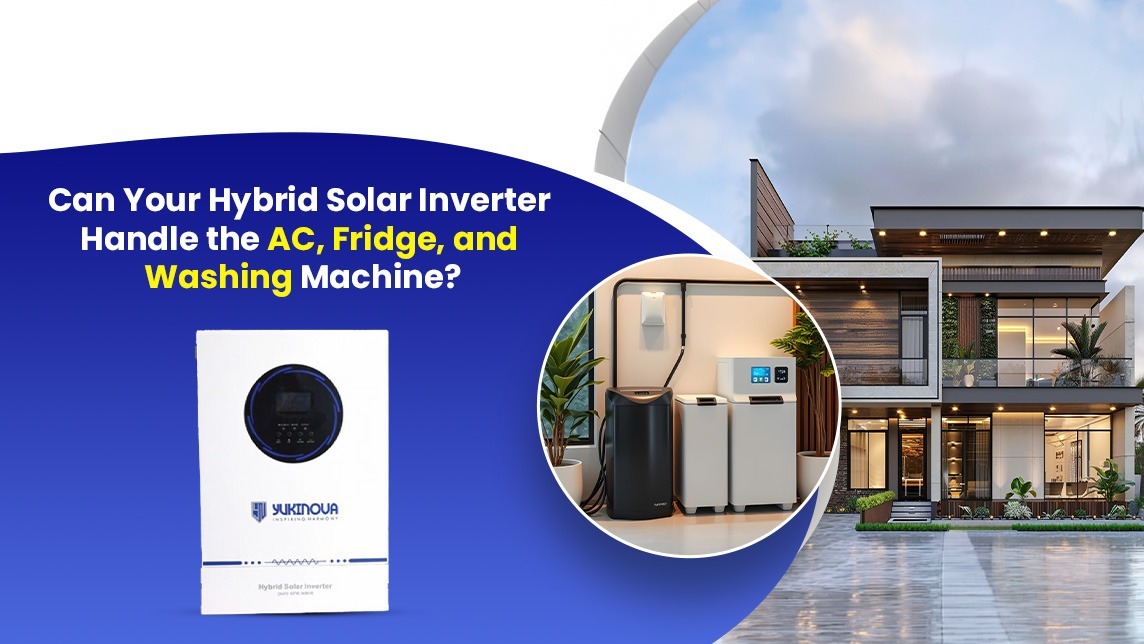
Can Your Hybrid Solar Inverter Handle the AC, Fridge, and Washing Machine?

Power cuts show up exactly when you need power the most. And suddenly everyone around you seems to be talking about solar. So the obvious question hits you. Can one of these Hybrid Solar Inverter systems actually run the big stuff? Your AC that you desperately need in summer. The fridge that hums away constantly. That washing machine you absolutely cannot live without.

Quick answer? Yes it can.

What is a Hybrid Solar Inverter?

The solar panels sit on the roof making electricity when the sun’s doing its thing. That power needs to go somewhere useful.

A hybrid solar inverter takes that solar power and uses it to run your house first. Whatever power is left after usage is stored in batteries for later. And if somehow solar isn’t making enough, like at night or during monsoon, the system just pulls from the electricity grid.

That switching between three different sources happens automatically. No buttons to press. No complicated settings. It just figures it out. That flexibility is why people prefer hybrid solar inverter setups these days.

1. AC

ACs are monsters when it comes to power. A one ton AC pulls around 1000 watts. Got a 1.5 ton unit? That’s pushing 1800 watts or even more during peak summer.

Now if your inverter is too small, it’s going to struggle. Might even shut down to protect itself. But if you sized it right, the AC runs smooth without drama.

Running one AC plus your normal stuff like fans and lights? You might need somewhere between 3 kilowatts to 5 kilowatts from your hybrid solar inverter.

And here’s the thing nobody mentions enough. If you want a long backup during those endless power cuts, battery size matters way more than people realize. A small battery with a big AC? Gets drained super fast.

2. Fridges

Here’s some good news for once.

Fridges don’t constantly eat power like you might think. Average pull is somewhere between 150 to 400 watts depending on the model.

There’s a small spike when the compressor starts up, but any decent inverter handles that spike without breaking a sweat.

Even a medium sized hybrid solar inverter runs a fridge easily. One less thing to worry about.

3. Washing Machines

This one depends heavily on what type you’ve got.

Semi automatic machines use way less power. Maybe 300 to 500 watts. Fully automatic ones especially the ones with built in heaters? Those can spike up to 2000 watts when they’re heating water for that hot wash cycle.

Here’s where people mess up. They try running an AC and a washing machine at the same time without checking if their system can handle both loads stacked together. Then things trip or shut down.

Load calculation sounds boring but skipping it causes actual problems later.

What Actually Matters When You’re Choosing

Here’s what you really need to look at: How many kilowatts your inverter can handle. How many kilowatt hours your battery stores. What your total home load actually is. How many hours of backup you actually want when power goes out.

Let’s say everything you want to run at once adds up to 4000 watts. Your inverter should handle that comfortably. Systems running at their absolute limit all the time don’t last long.

Good quality Hybrid Solar Inverter units also deal with those annoying power spikes when appliances first turn on. Makes everything run smoother overall instead of lights dimming every time the fridge compressor kicks in.

So Does It Work or Not?

Can you run an AC, fridge, and washing machine together on a hybrid solar inverter? Absolutely yes.

But sizing matters more than anything else. Bigger appliances need proper planning upfront. Get the system designed correctly from the start and you end up with lower monthly bills and reliable backup whenever the grid decides to take a break.

Ready to power your AC, fridge, and washing machine without worrying about rising bills or sudden outages? Upgrade to the Yukinova Solar Hybrid Inverter and get a system that’s smartly designed and built to handle your real home load.

FAQs

Q. Can AC run during power cuts on hybrid solar setup?

Yep, as long as your battery has enough juice stored up to handle it.

Q. How long will the battery keep my AC running?

Depends completely on battery size and how much power your AC pulls. Bigger battery, bigger AC, you do the math.

Q. Is 3 kilowatt inverter enough for heavy stuff?

For one AC plus basic home load maybe yeah. Want to run more? You probably need 5 kilowatts or higher.

Q. Does the fridge eat up too much solar power?

Nah. Uses moderate power and cycles on and off. Not a problem really.

Q. Does hybrid solar work for smaller homes too?

Sure does. Just needs to be sized correctly for what you’re actually running. Small home doesn’t automatically mean a small system if you’ve got big appliances.

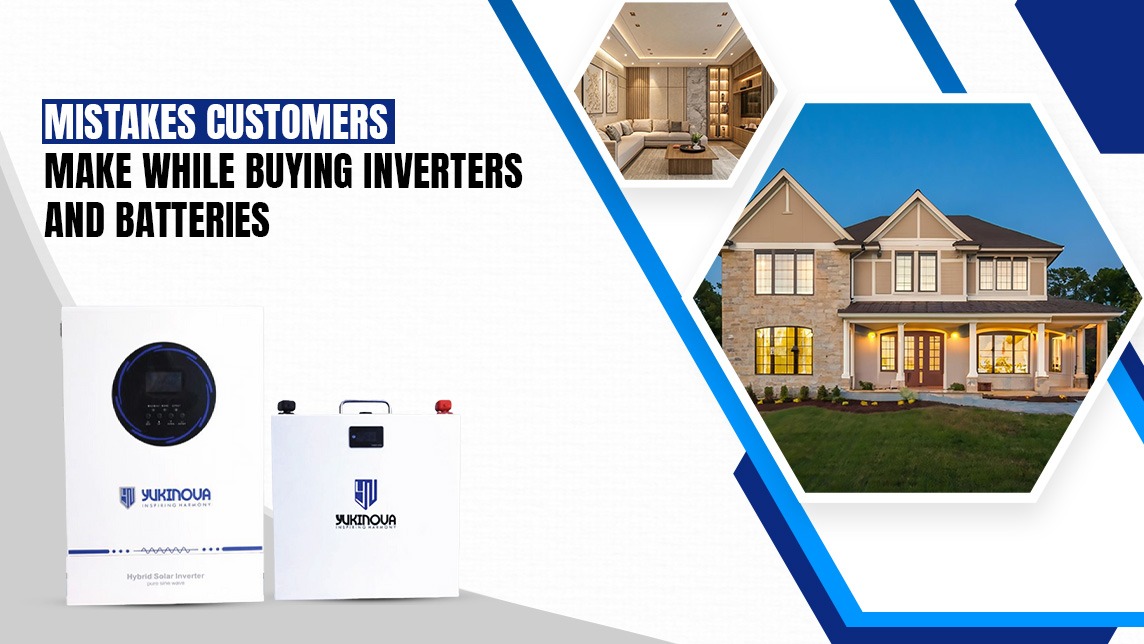
Mistakes Customers Make While Buying Inverters and Batteries

Most inverter and battery problems do not begin after installation. They begin at the buying stage. When purchases are made in urgency rather than careful consideration. These rushed decisions will cause long term performance issues. This is especially the case when the lithium battery is selected based on assumptions and not actual facts.

Many people will rely on random suggestions, price comparisons and word of mouth instead of evaluating how much power is actually needed in their homes. And soon this gap between your assumption and reality become obvious when backup becomes inconsistent and battery wears faster

1. Mistaking Higher Capacity for Better Backup

One of the most common mistakes involves capacity selection. Many customers assume that a higher Ah rating automatically guarantees longer backup. In reality, capacity works only when matched correctly to the connected load.

When appliances draw power unevenly, batteries discharge faster than expected. Consequently, even large systems feel inadequate. Customers who calculate actual usage before buying experience far more reliable performance, regardless of battery size.

For example, many households choose a higher capacity battery assuming it will support all appliances during outages. However, when lights, fans, a refrigerator, and occasionally high load appliances run together without planning, backup time drops sharply. The issue is not battery size, it is unrealistic load expectation.

2. Ignoring Daily Power Usage Patterns

Not all power cuts behave the same way. Some households face frequent short outages. Others experience long evening interruptions. However, many buyers ignore this distinction entirely during inverter battery buying decisions.

A lithium battery for inverter performs best when usage patterns align with its operating design. Frequent deep discharges without structured recharging reduce efficiency over time. Therefore, understanding how and when power gets used matters as much as the technology itself.

3. Overlooking Installation Environment

Installation conditions rarely receive attention while choosing the right inverter battery. Batteries often end up placed in tight corners, poorly ventilated rooms, or areas exposed to heat. Over time, these conditions quietly reduce efficiency.

Lithium inverter battery systems handle energy efficiently, but heat buildup still affects internal balance. Proper airflow and correct placement preserve performance without any additional investment. This detail often separates long lasting systems from disappointing ones.

4. Letting Price Decide Everything

Price comparison feels logical at the buying stage. However, price only decisions often lead to regret later. Customers sometimes compromise on quality to reduce upfront cost. As a result, maintenance expenses increase over time.

Long term reliability always proves more valuable than short-term savings, especially for systems expected to perform daily during power interruptions.

5. Assuming Technology Eliminates User Responsibility

Advanced technology simplifies operation, but it does not remove responsibility. Many buyers believe lithium systems require no attention. This belief leads to careless load management and irregular charging habits.

Lithium battery for inverter solutions deliver excellent efficiency. However, proper charging routines and sensible load distribution remain essential. When users engage responsibly, performance stays predictable and consistent.

Why Informed Buying Changes Everything

Yukinova designs lithium batteries for inverter solutions around real household usage conditions, not just brochure specifications. When buying decisions are informed by actual load, usage timing, and environment, systems perform the way users expect them to.

Customers who buy with clarity experience fewer surprises. They plan loads. They respect operating guidelines. As a result, backup performance remains steady rather than inconsistent.

Conclusion: Reliability Begins at the Decision Stage

Most inverter and battery problems begin at the purchase stage, not years later. Mistakes made early shape performance for the entire life cycle.

Lithium battery for inverter technology offers excellent efficiency and longevity. Yet, its value appears only when customers choose wisely. Yukinova combines reliable engineering with practical guidance ensuring power backup performs reliably because the right decisions were made at the buying stage.

Understand how choosing the right lithium battery for inverter and planning usage correctly improves long-term backup performance in Indian homes.

FAQs

Q1. What is the most common mistake while buying an inverter battery?

Ignoring actual load requirements and daily usage patterns.

Q2. Is lithium battery for inverter suitable for Indian homes?

Yes, when selected correctly and used according to real power conditions.

Q3. How does Yukinova support long-term reliability?

Yukinova designs systems for real usage conditions and guides customers toward informed buying decisions.

How Hybrid Solar Inverters Maximize Business Profit While Reducing Energy Costs

For many businesses, electricity quietly eats into profits every single month. It is predictable, unavoidable, and often ignored until bills rise or power fails. Over time, this lack of control turns energy into a growing operational risk. That is exactly why more businesses are now shifting toward the hybrid solar inverter approach, not as a trend, but as a practical financial decision. Yukinova works with businesses that are looking for control, not dependency. In this blog, let us figure out how Hybrid Solar Inverters maximize business profits while reducing costs.

How Hybrid Solar Inverters Help Businesses Maximize Energy Savings

The grid was never designed for business certainty. Tariffs fluctuate. Outages happen without warning. Backup generators solve one problem while creating another fuel costs, noise, and maintenance. This cycle drains both time and money.

A hybrid solar inverter breaks that cycle. It connects solar power, battery storage, and grid supply into one intelligent system. Solar energy takes priority. Excess power is stored instead of wasted. The grid steps in only when genuinely required. Slowly, but clearly, businesses move from reaction to control.

Why Hybrid Solar Inverters Are the Smart Investment for Your Business

Energy savings are not theoretical. They show up during daily operations. A hybrid solar inverter automatically uses solar power during peak working hours, when electricity rates are the highest. Later, stored energy supports evening loads or short power interruptions.

Because of this, grid consumption drops. Generator usage drops even more. Fuel expenses shrink. Maintenance schedules relax. None of these savings look dramatic alone. Together, over months, they noticeably improve cash flow.

That is where the business value becomes obvious.

Power Reliability Has a Direct Impact on Revenue

Downtime rarely looks expensive on paper, but businesses feel it immediately. Production delays, stalled systems, idle staff, missed deadlines, it all adds up. With a hybrid solar inverter, power transitions happen quietly and instantly. Most teams do not even realize an outage has occurred.

This consistency protects equipment, workflow, and customer commitments. In real terms, it protects revenue. Reliability is not just technical stability, it is financial stability.

Long-Term ROI Without Locking the Business In

Many decision-makers hesitate because they fear rigid systems. Hybrid solutions avoid that problem. Yukinova systems are built to scale. As energy demand grows, additional solar panels or batteries integrate smoothly. There is no need to replace the core setup.

Over time, reduced bills, lower fuel costs, and minimal wear deliver a strong return on investment. More importantly, the system keeps working as the business grows, rather than limiting it.

Why Businesses Work With Yukinova

Yukinova focuses on function before hype. Each hybrid solar inverter is designed for stable output, intelligent energy flow, and long-term reliability. Monitoring tools offer clear visibility, not confusing data. Businesses understand what they consume, where they save, and how to optimize further.

That clarity builds confidence and better decisions.

Conclusion

A hybrid solar inverter is a comprehensive solution for businesses as it eliminates uncertainty while providing higher margins. Yukinova’s Hybrid Solar Inverters reduce energy expenditure, provide consistent power, and allow for future development/expansion. Businesses can convert their energy liabilities into an asset through this innovative technology. As a result, you will enjoy a more stable financial situation, quieter business operations, and greater overall profits in the long run.

FAQs

Q1. How does a hybrid solar inverter reduce monthly costs?

By prioritizing solar energy, storing excess power, and minimizing grid and generator usage.

Q2. Is it reliable during frequent power cuts?

Yes. The system switches instantly between power sources without disruption.

Q3. Why choose Yukinova?

Because Yukinova delivers practical, scalable, and business-focused hybrid solar inverter solutions.

Why Most Homes Have Solar Power but Still Face Blackouts

At surface level, a solar-powered home should never go dark. Panels generate electricity, sunlight is free, and energy bills drop steadily. Yet blackouts still occur, often without warning. This situation frustrates homeowners because the issue feels illogical. In reality, the problem rarely comes from solar power itself. Instead, it results from how most residential systems are planned, connected, and controlled. Yukinova Hybrid solar inverter comes with the perfect solution to this frustrating situation.

In this blog, let’s figure out why most homes in spite of having solar power face blackout.

Solar Adoption Without Backup Thinking

Most homes adopt solar to reduce electricity costs, not to secure backup power. Because of this focus, installers usually connect panels directly to the grid. When the grid fails, the solar system shuts down immediately. This shutdown protects infrastructure and workers, but it also leaves homes without power. Therefore, solar installation alone does not guarantee continuity. Without a hybrid solar inverter, solar energy cannot support essential loads during outages.

Why Energy Storage Defines Reliability

Solar panels produce electricity during daylight hours. However, households consume power throughout the day and night. When systems lack storage, excess energy flows back to the grid and becomes unavailable locally. As a result, homes remain dependent on external supply. A hybrid solar inverter changes this balance by storing usable energy and releasing it precisely when grid power is unavailable.

System Design Gaps Create Blackouts

Many installations prioritize panel capacity while overlooking actual energy behavior. High-load appliances demand stable surge handling, especially during transitions. Poorly matched systems struggle under these conditions. Even when batteries are present, inefficient power management limits performance. Here, intelligent system architecture becomes essential. A hybrid solar inverter coordinates solar input, battery discharge, and grid interaction smoothly, reducing stress and preventing failure points.

The Role of Energy Density in Backup Power

Backup duration depends heavily on energy density. Low-density systems exhaust power quickly, regardless of battery size. Yukinova addresses this limitation through refined engineering. With optimized design, Yukinova systems deliver four to five times higher usable efficiency compared to conventional setups. This improvement allows for longer backup duration, stronger output stability, and consistent performance during extended outages.

Why Yukinova Delivers Consistent Power

Yukinova treats reliability as a core design requirement, not an optional feature. Every hybrid solar inverter undergoes controlled testing for voltage stability, load variation, and transition accuracy. As a result, homes experience smooth power continuity even when grid conditions fluctuate unexpectedly.

Financial Value Beyond Electricity Savings

Blackouts impose indirect costs such as appliance damage, work disruption, and daily inconvenience. Although solar systems reduce monthly bills, unreliable performance reduces overall value. Yukinova systems protect routines while optimizing energy usage. Over time, homeowners gain not only financial efficiency but also operational confidence through a dependable hybrid solar inverter solution.

Building Practical Energy Independence

True energy independence requires more than rooftop panels. It requires storage intelligence, system balance, and future readiness. Yukinova solutions scale easily as energy demand grows. Through advanced design and intelligent control, Yukinova systems transform solar installations into dependable power infrastructure.

Conclusion

Solar power does not fail homes. Incomplete system planning does. Yukinova bridges this gap through engineered reliability, intelligent storage, and advanced hybrid solar inverter technology. With optimized design, Yukinova delivers uninterrupted power where standard systems consistently fall short.

Frequently Asked Questions

Q1. Why do solar homes face blackouts?

Most grid-connected systems shut down during outages due to safety requirements.

Q2. How does a hybrid solar inverter help?

It enables stored energy use during outages without grid dependency.

Q3. Why choose Yukinova systems?

Yukinova delivers engineered reliability, higher efficiency, and proven real-world performance.